"It was a great experience! We felt completely confident and safe. Go is a great guide! I highly recommend doing it – it's excellent value for money ☺️"
Cape Maeda, Onna Village · Check the Flag Before You Drive
Blue Cave Okinawa
The Blue Cave is a public site with public stairs, and on a blue-flag day you can swim it for the price of parking. On a yellow flag the management office allows the water only to people with a diving company, and on a red flag the stairs shut altogether — but a boat can still reach the cave mouth. This is which day you are having, and what to do about it.
From
$45
per person
Free cancellation
- 4.9 / 5 156+ Reviews
- 3 Flags Decide Your Day
- 20–30°C Water, Feb to Aug
- Free Cancellation
The Experience
What This Tour Includes
Lifted from the operator's own listing rather than written by us. Check the age limit before you book — eight of the ten Blue Cave trips publish an upper one, two of them at 55.
Highlights
- Enjoy a private snorkeling tour in Okinawa's Blue Cave with a dedicated guide
- Swim in the crystal-clear waters of Onna Village and explore the Blue Cave
- Get professional photos and short videos of your adventure at no extra cost
- Relax knowing the tour is safe and fun for children and non-swimmers
- Benefit from full instructor support and a tour tailored to your pace
What's Included
- Guided tour with a private instructor
- Comprehensive insurance coverage
- Full snorkeling gear rental (wet suit, mask, fins, and life jacket
- High-quality digital photos and videos
Good to know: 1. Safety & Health Restrictions · Medical: Not suitable for heart disease, respiratory/ear issues, or pregnant women. · Alcohol: Intoxicated participants are strictly refused entry without refunds. · Age: Limited to ages 6–59 for safety. · 2. Weather & Sea Conditions · Rain: Tours run if sea conditions are safe. · Blue Cave: Managed by local government. If closed or sea is poor, an alternative beach tour will be proposed. You can choose to accept it or receive a full refund. · 3. Preparation & ArrivalAttire: Wear swimwear under clothes. Bring a towel and change of clothes. · 4. Timing: Arrive 10 minutes early. Late arrivals may be treated as cancellation with no refund. · 5. Facility FeesExtras: Parking (¥100/hr) and hot showers (¥200) not included. · Not suitable for: Children under 6 years, Pregnant women, People with heart problems, People over 60 years, People with a cold, People over 243 lbs (110 kg), People with high blood pressure · Not Included: Parking fee (¥100 per hour), Hot shower fee (¥200)
How a Blue Cave Trip Actually Works
Four steps, one flag, and one decision you should make before you have driven an hour up the coast.
Read the Flag Before You Leave
The Cape Maeda Management Office flies one of three flags and publishes the state live, with a camera, at maedamisaki.jp/sea-status. Blue means anyone may swim. Yellow means the water is open only to people with a diving company or instructor. Red means nobody goes down the stairs. The office answers the phone on 098-982-5339 from 8:30.
Decide Shore or Boat — They Are Not the Same Decision
A red flag closes the stairs. It is a land-facility decision, not a closure of the sea, so boats leaving Maeda Fishing Port can still reach the cave mouth. Operators put their own run rates at roughly 35–60% for shore entry against 70–90% by boat. Both figures come from companies selling the trips, so treat them as a range and not a measurement.
Wear the Life Jacket — It Is Not Optional Here
The management office requires a life jacket or buoyancy aid for snorkellers, and one operator here cites Okinawa Prefectural Public Safety Commission regulations as the reason. Cape Maeda is explicitly not a designated swimming beach: no lifeguards, no stinger nets, and the office states plainly that it is not responsible for anything that happens in the water.
Go Early or Go Last
Onna Village counts more than 300,000 users a year at the cape and estimates peak use at about 7,000 in a single day. The car park holds 180 cars and fills by around 08:00 in high season. Operators report that so many people read 'go early' that the first slots are now busy too — and that the last slot of the day is often the emptiest, because Okinawa's sunset runs about 50 minutes later than Tokyo's.
Photo Gallery
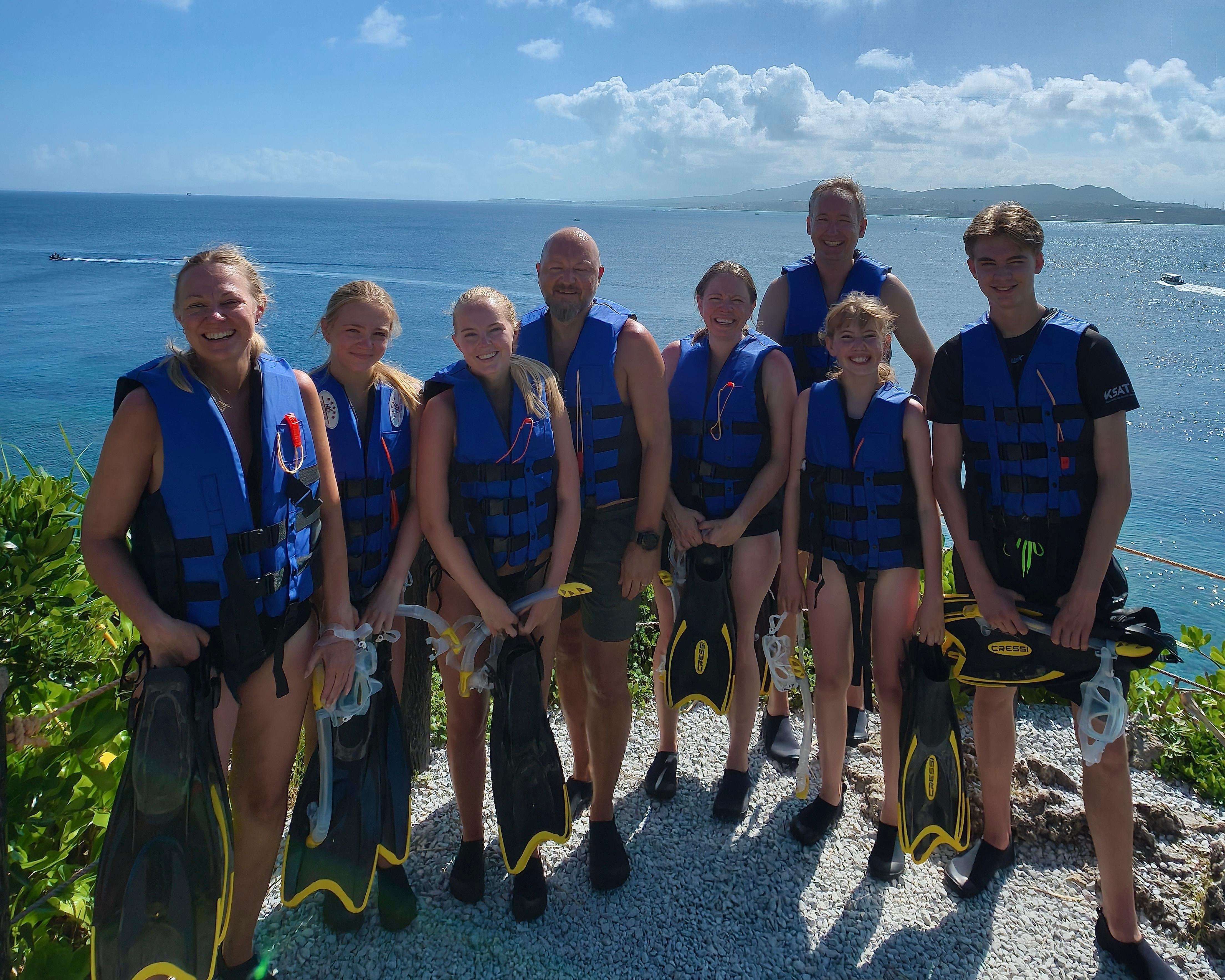
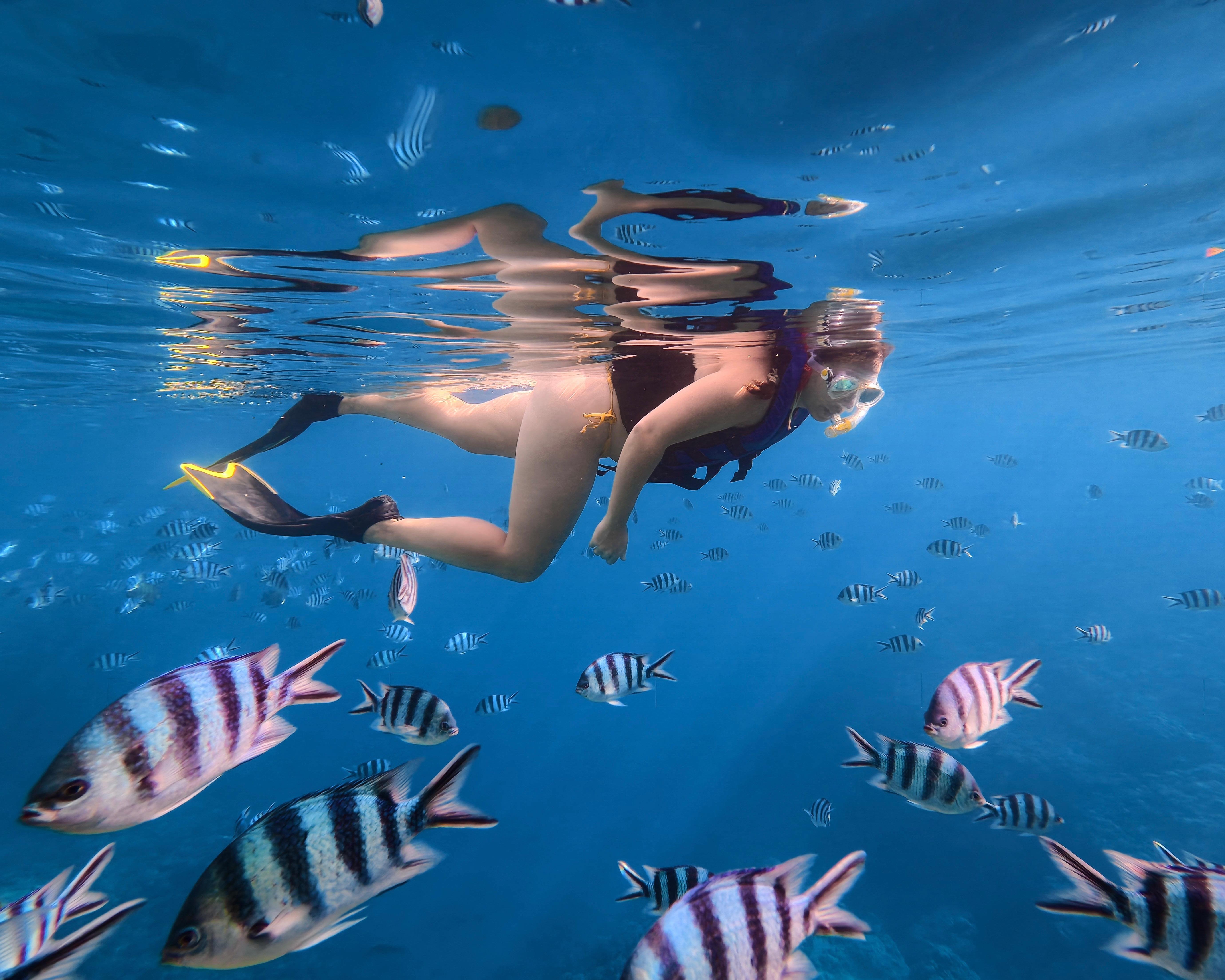
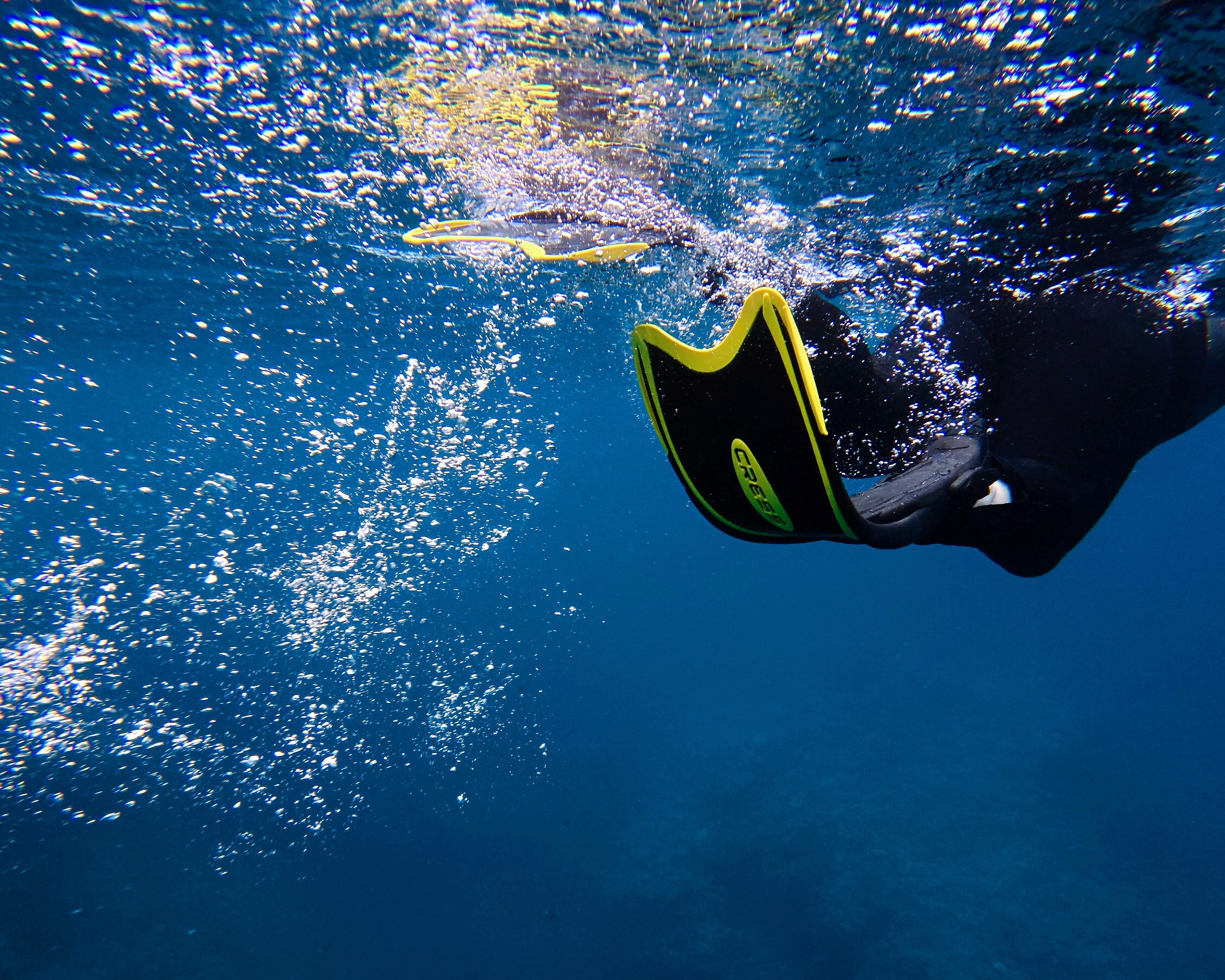
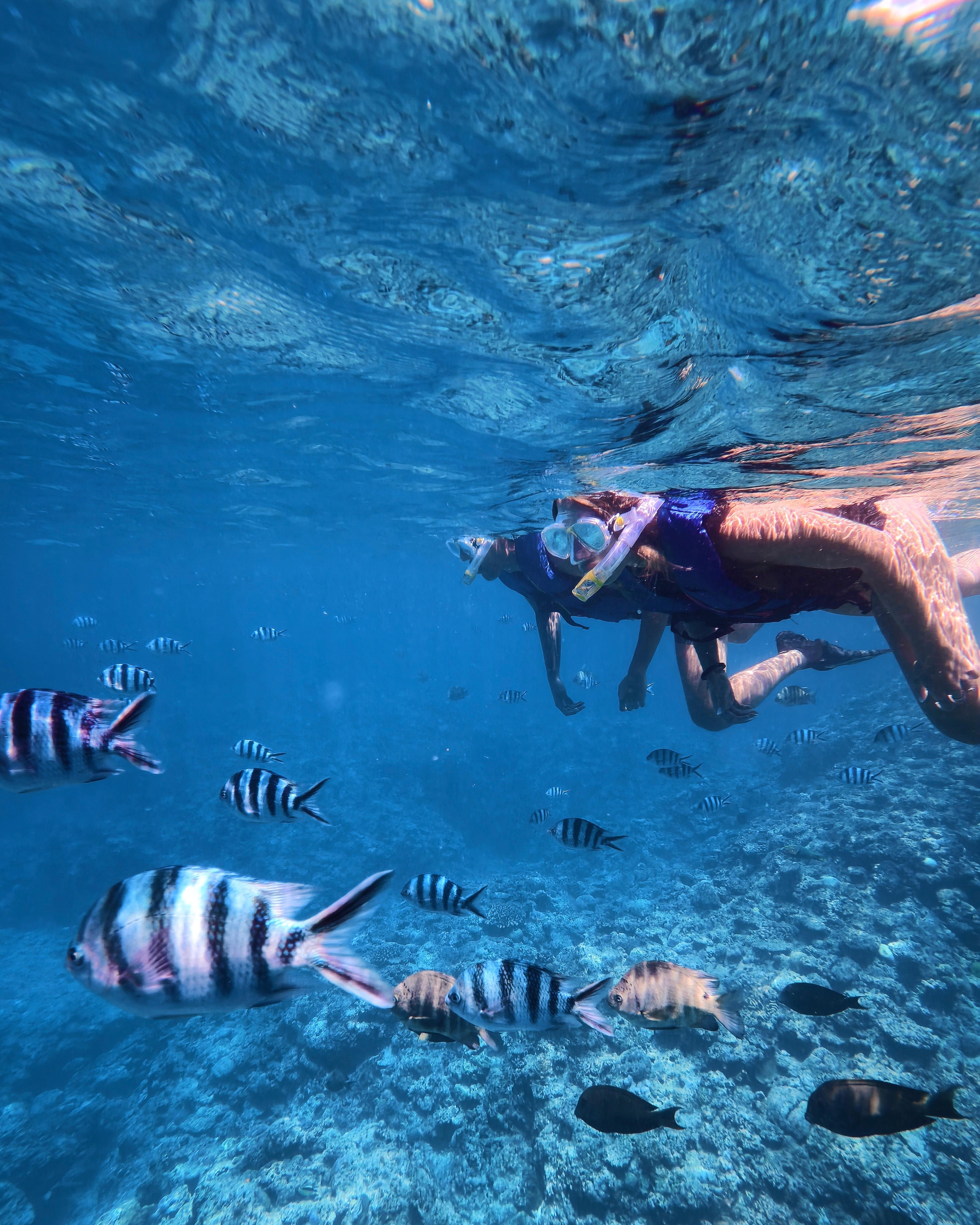
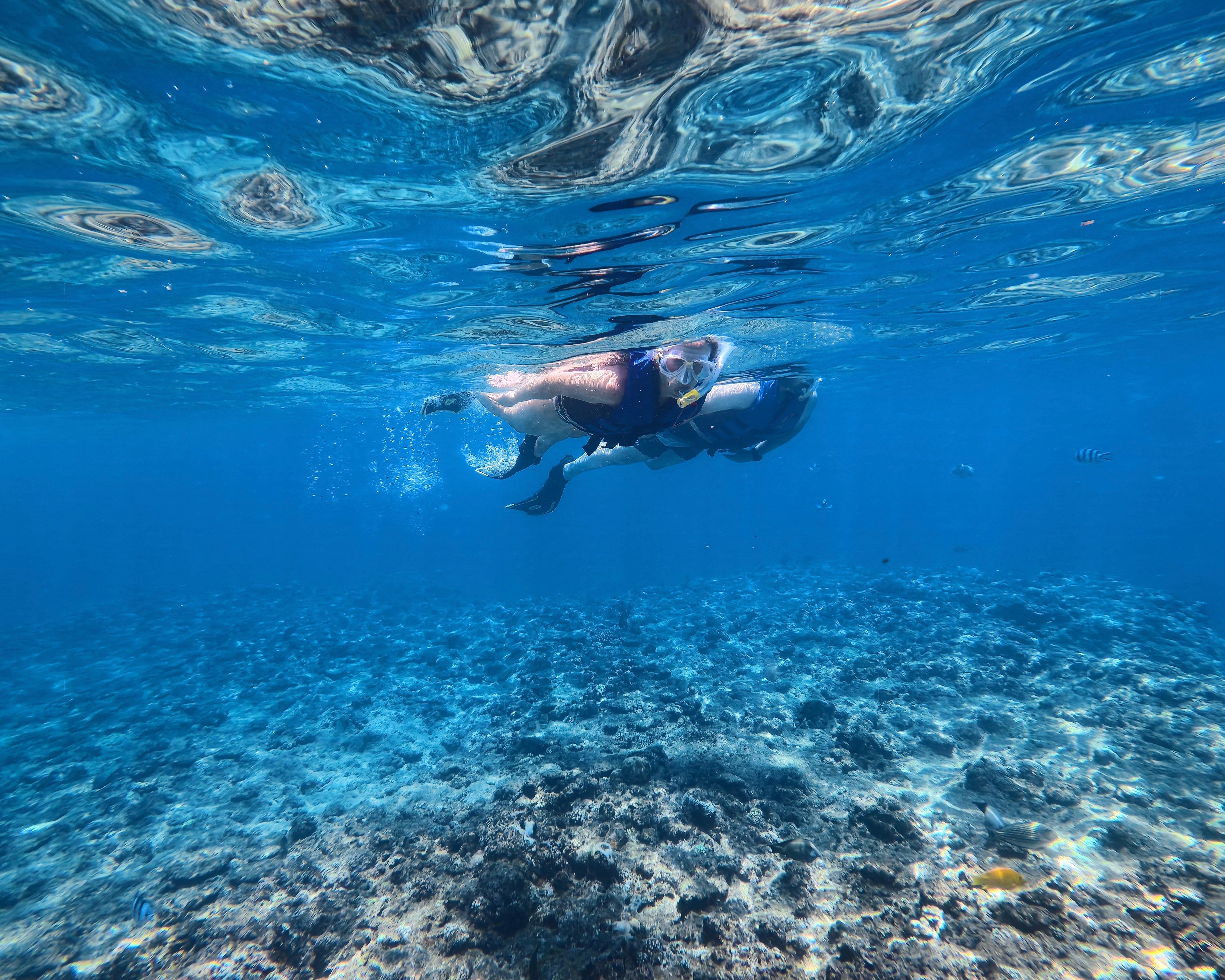
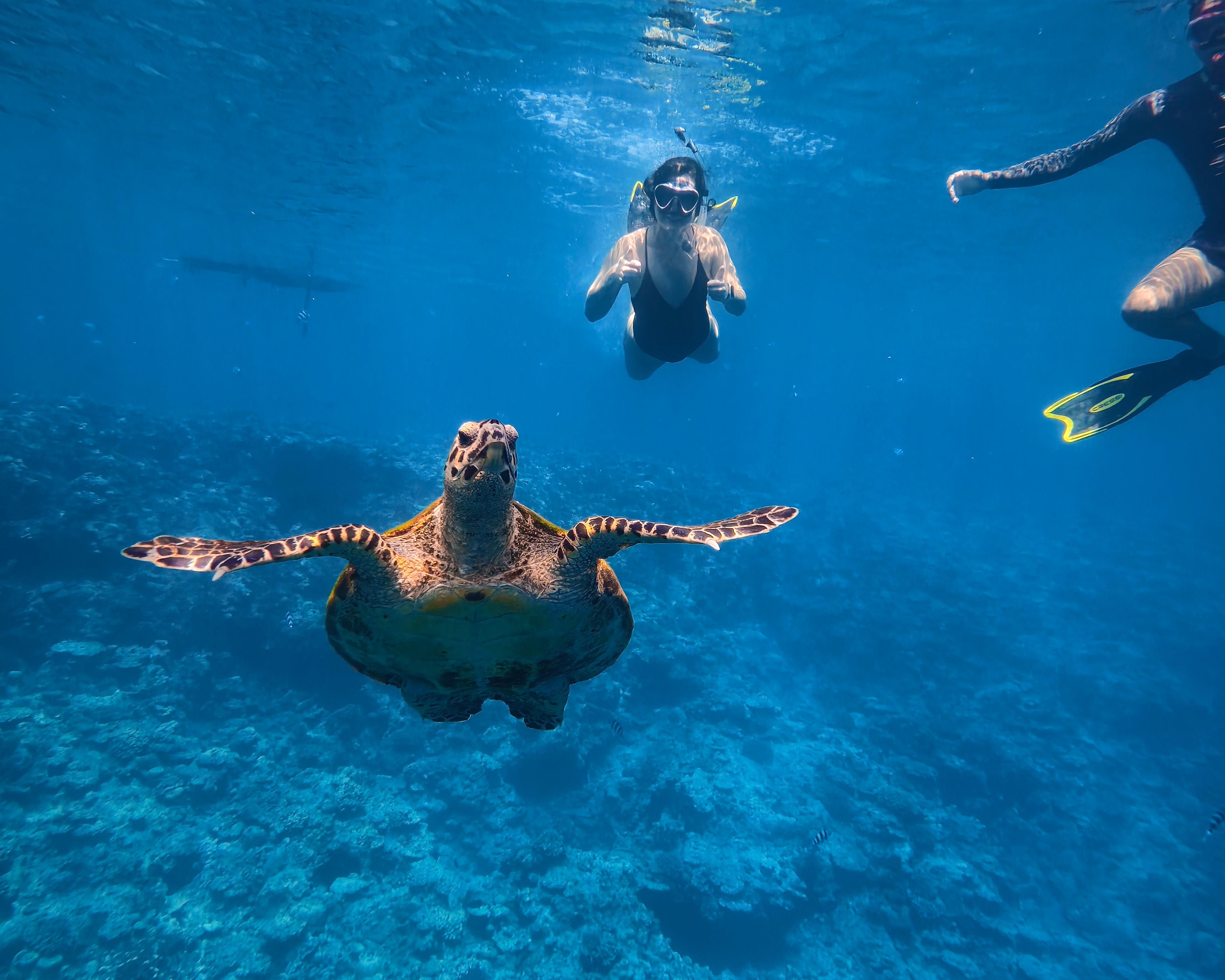
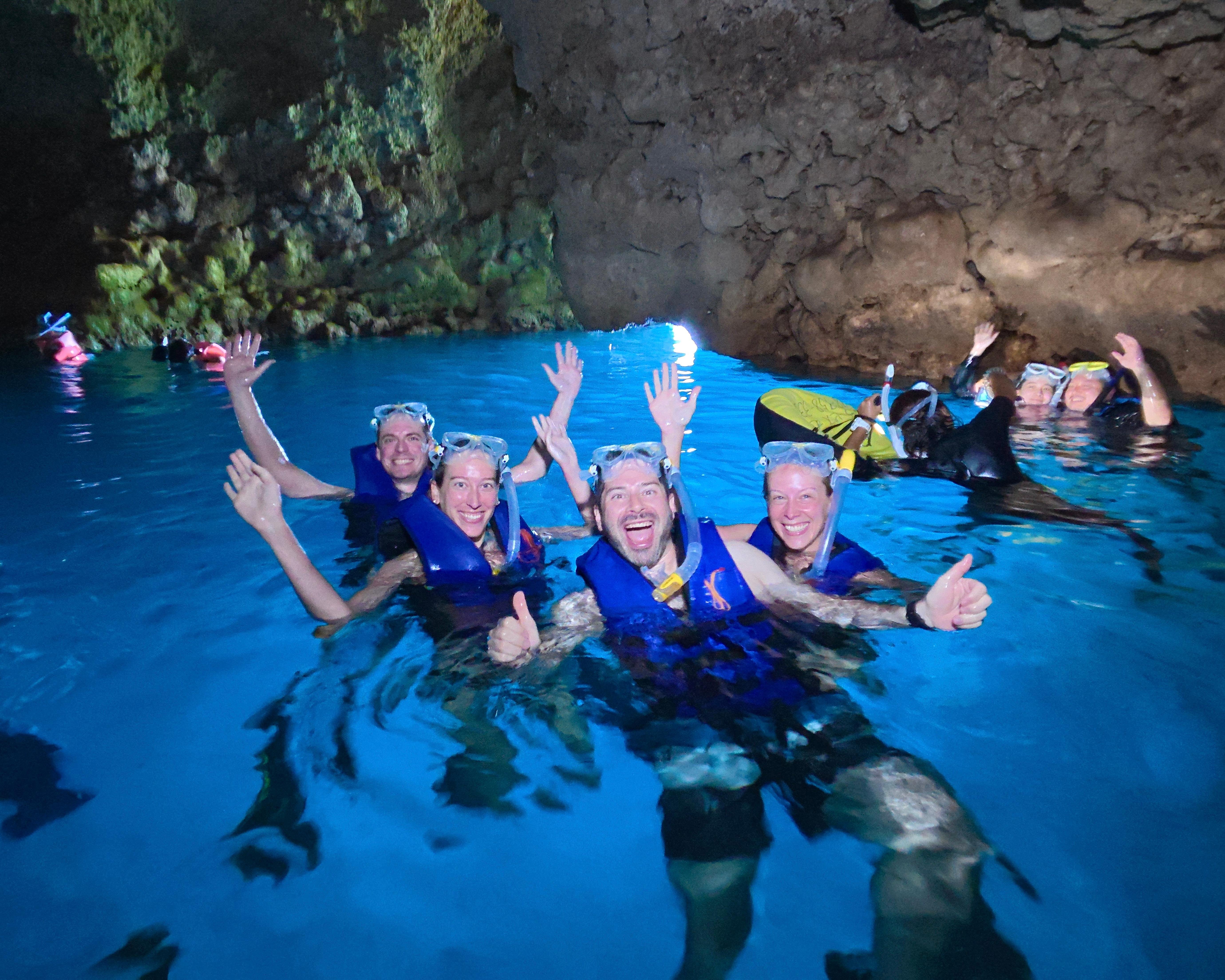
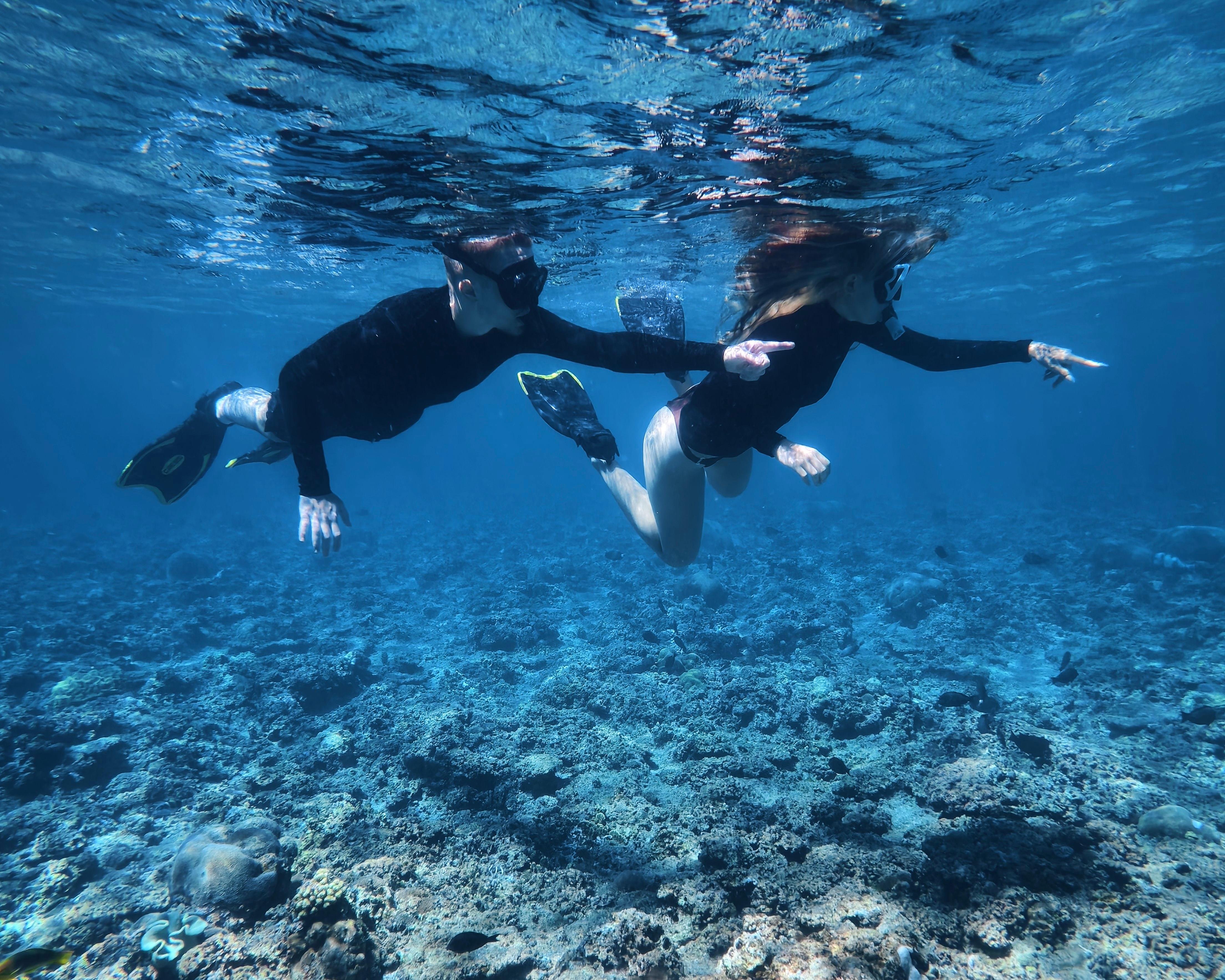
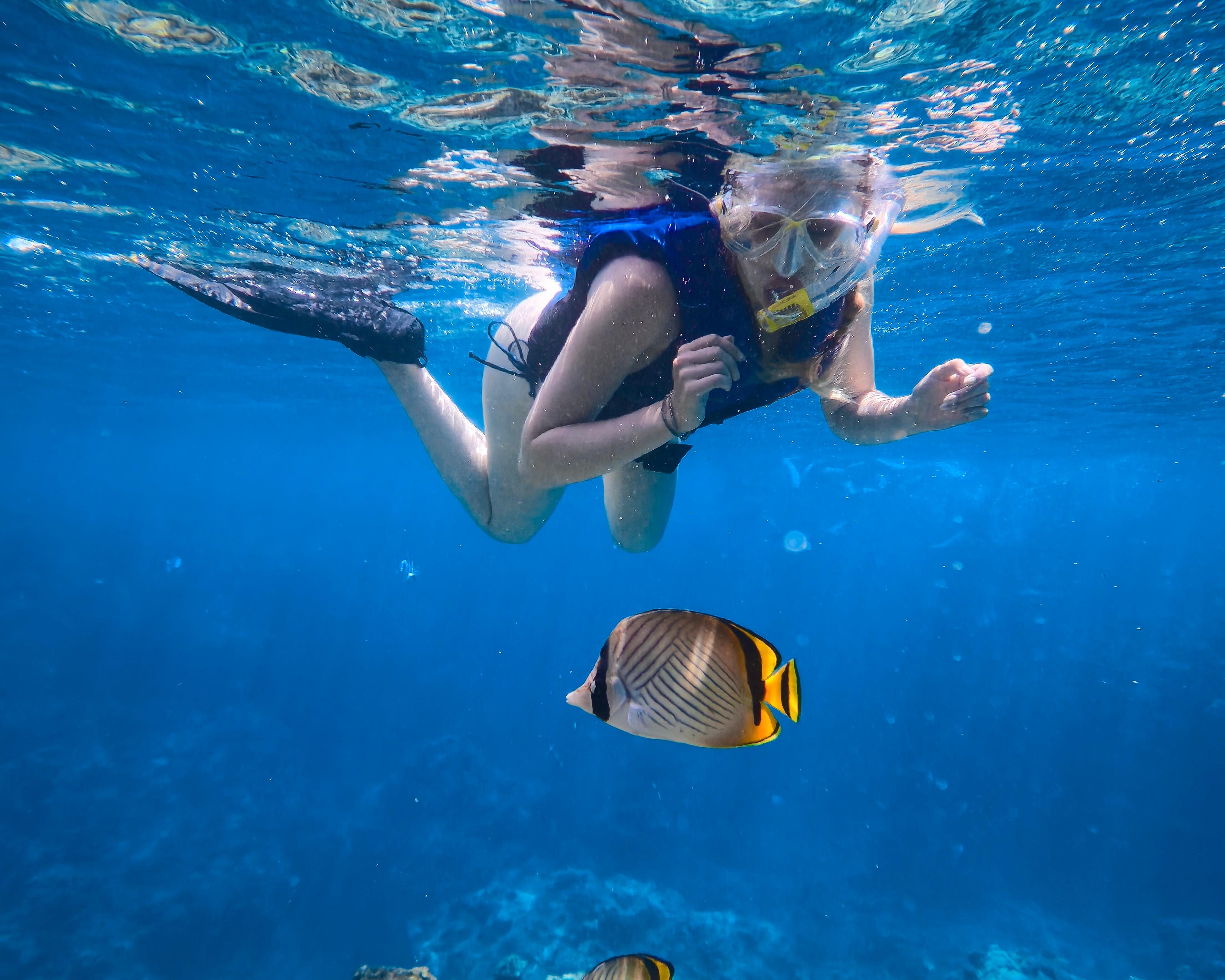
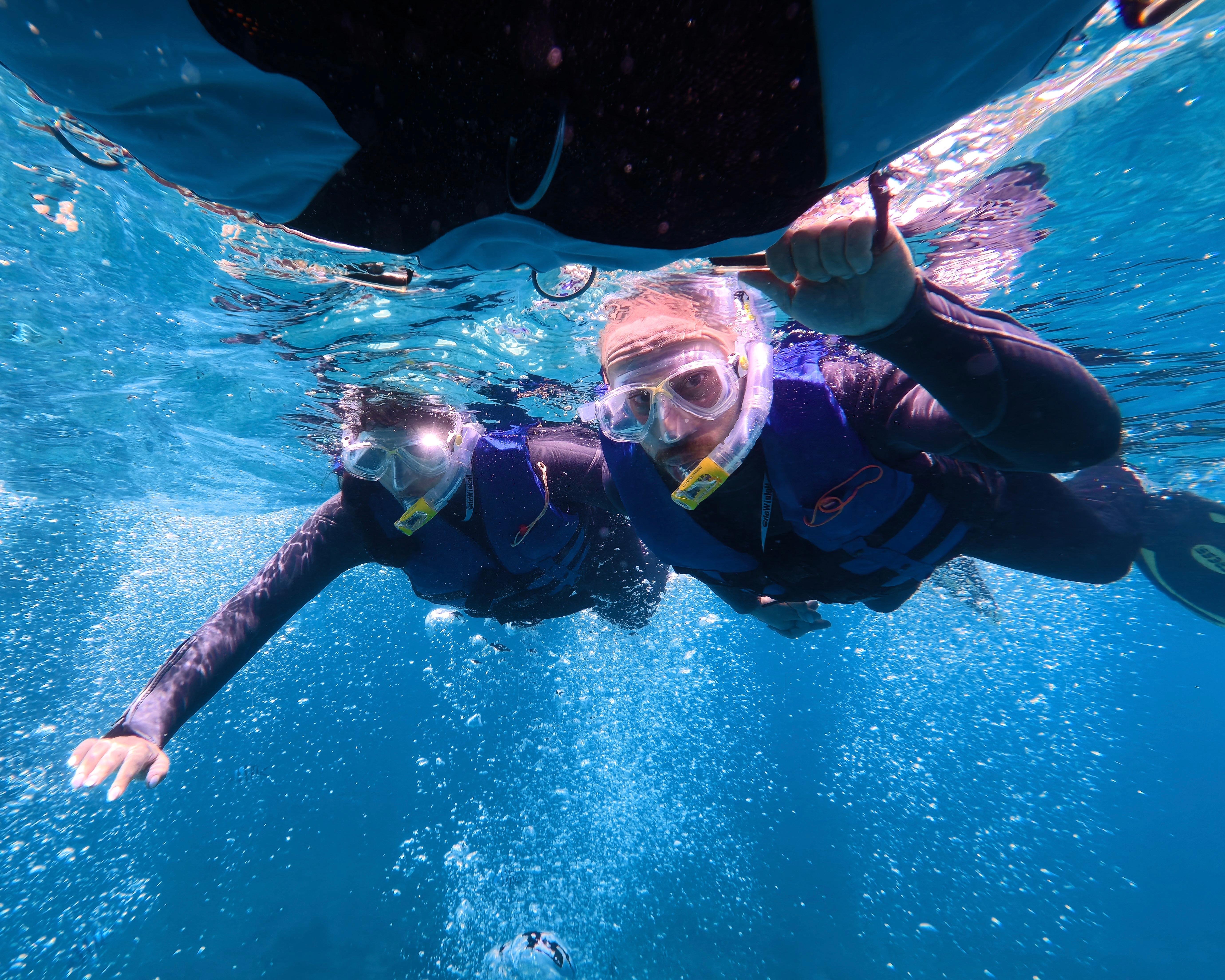
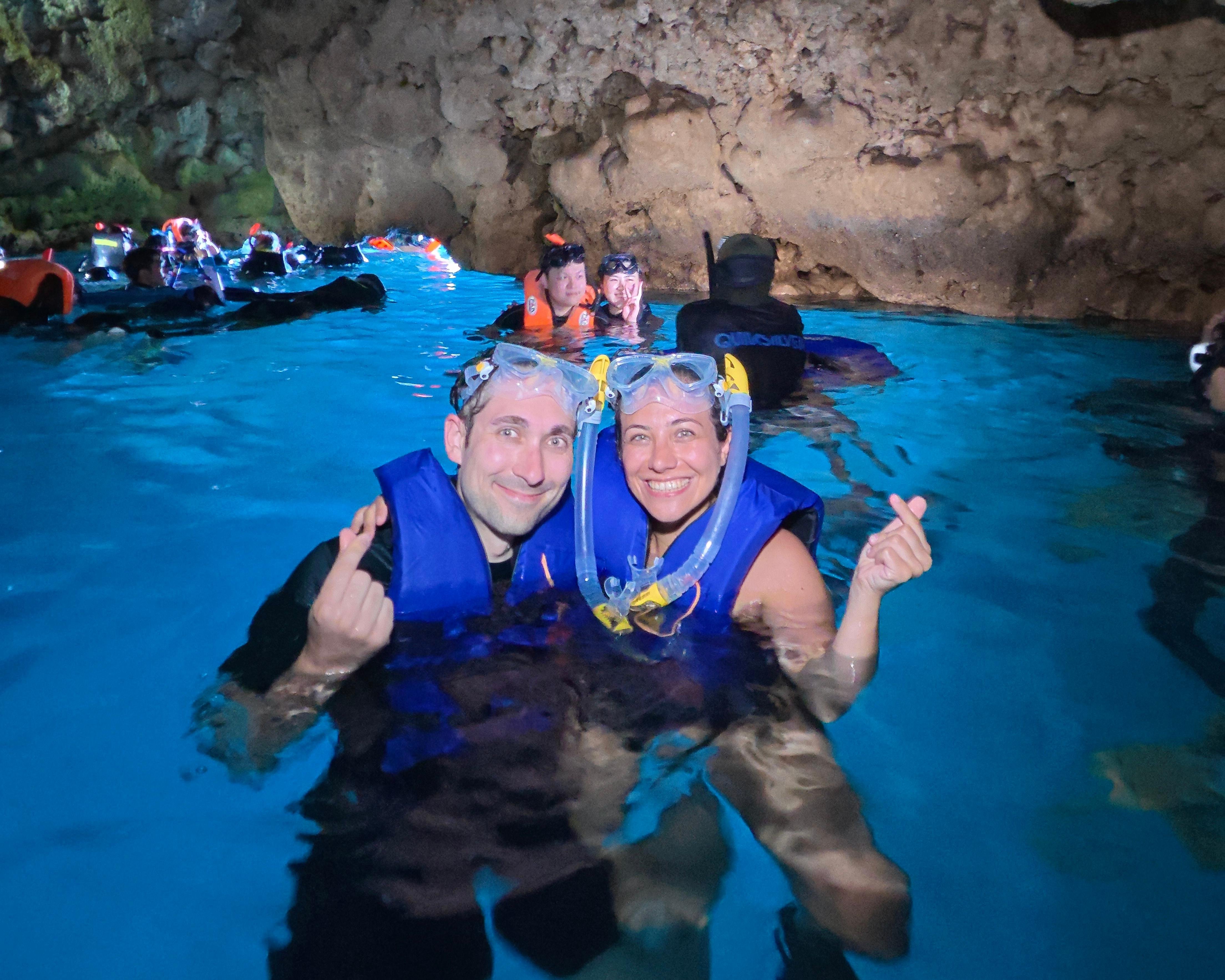
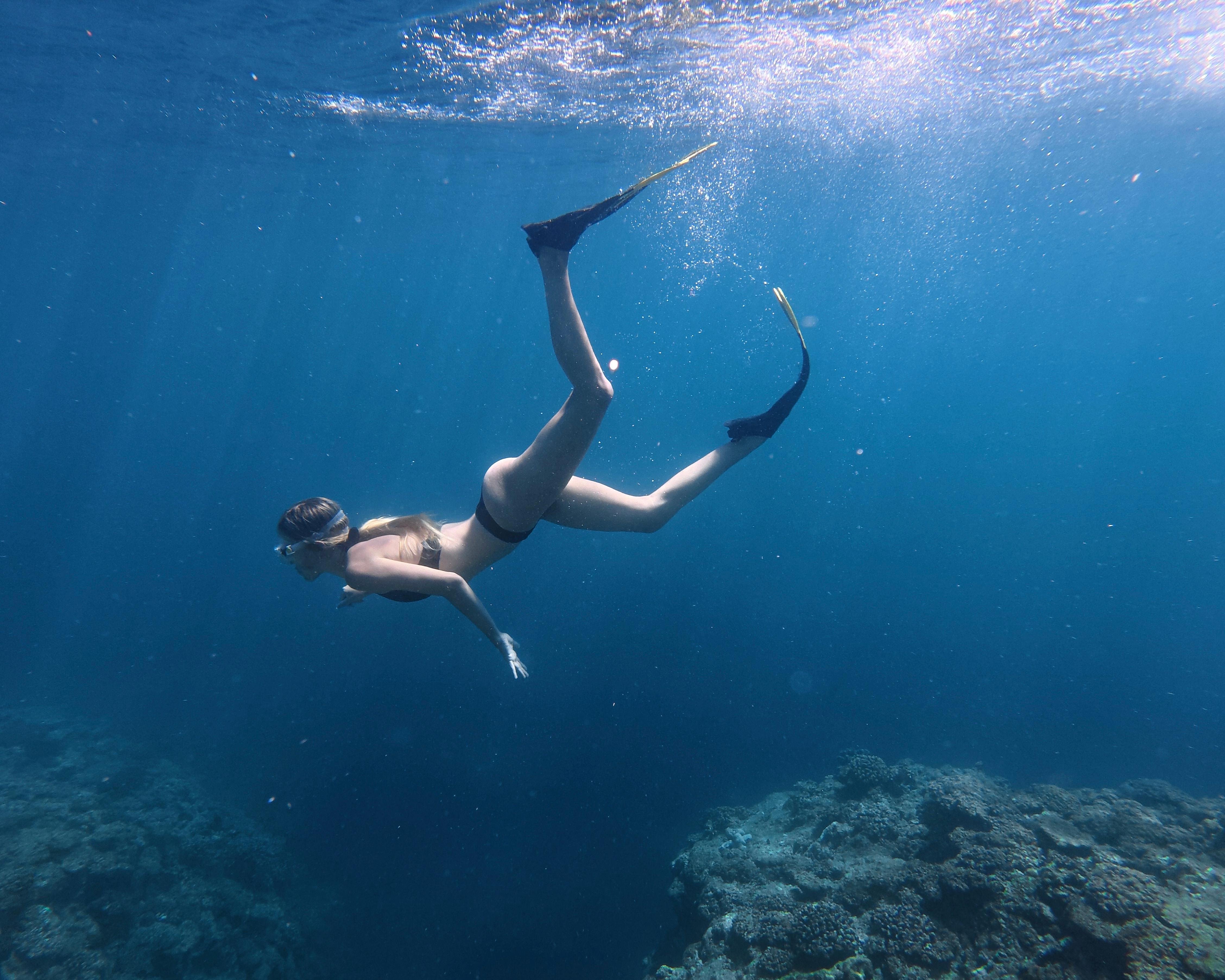
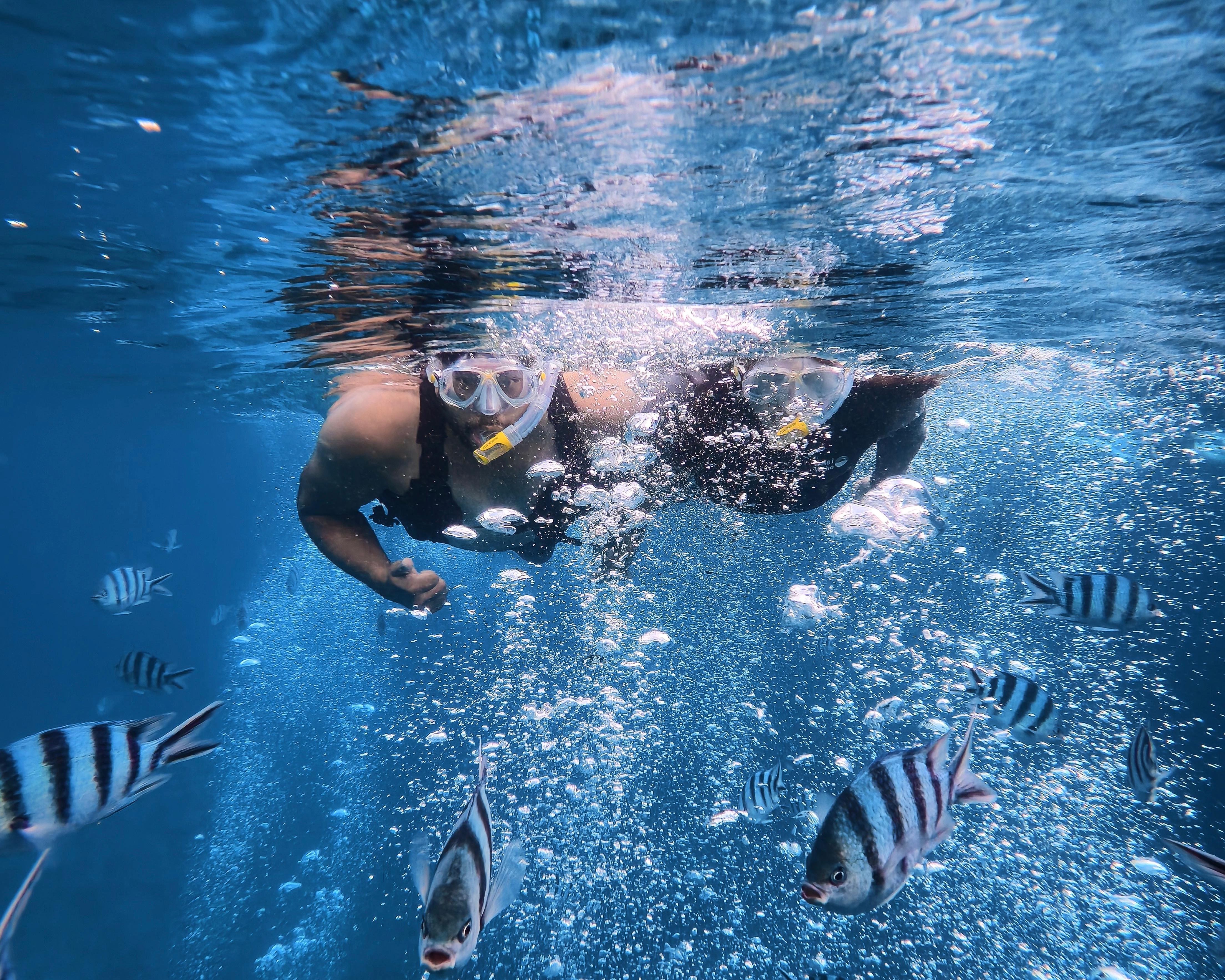
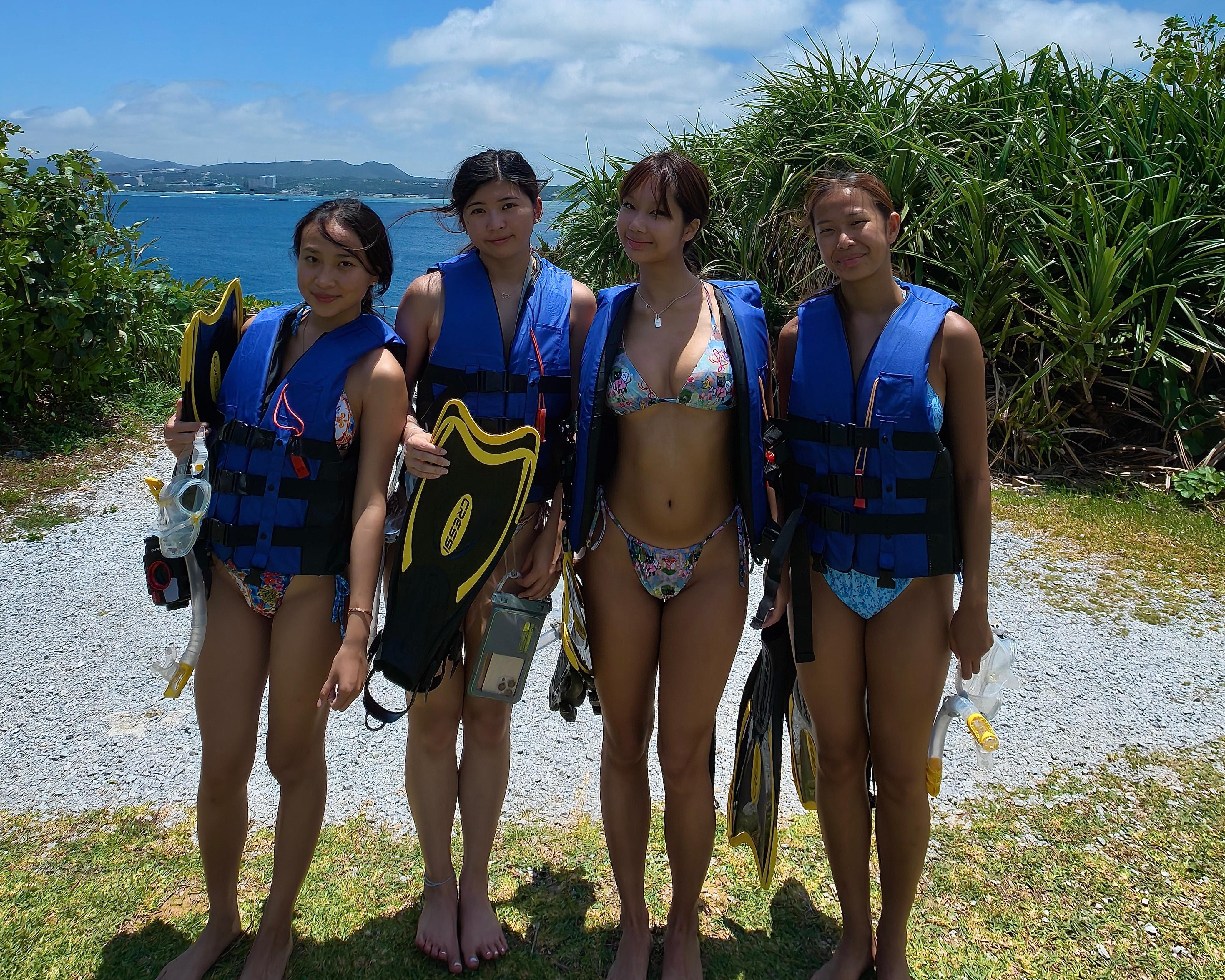
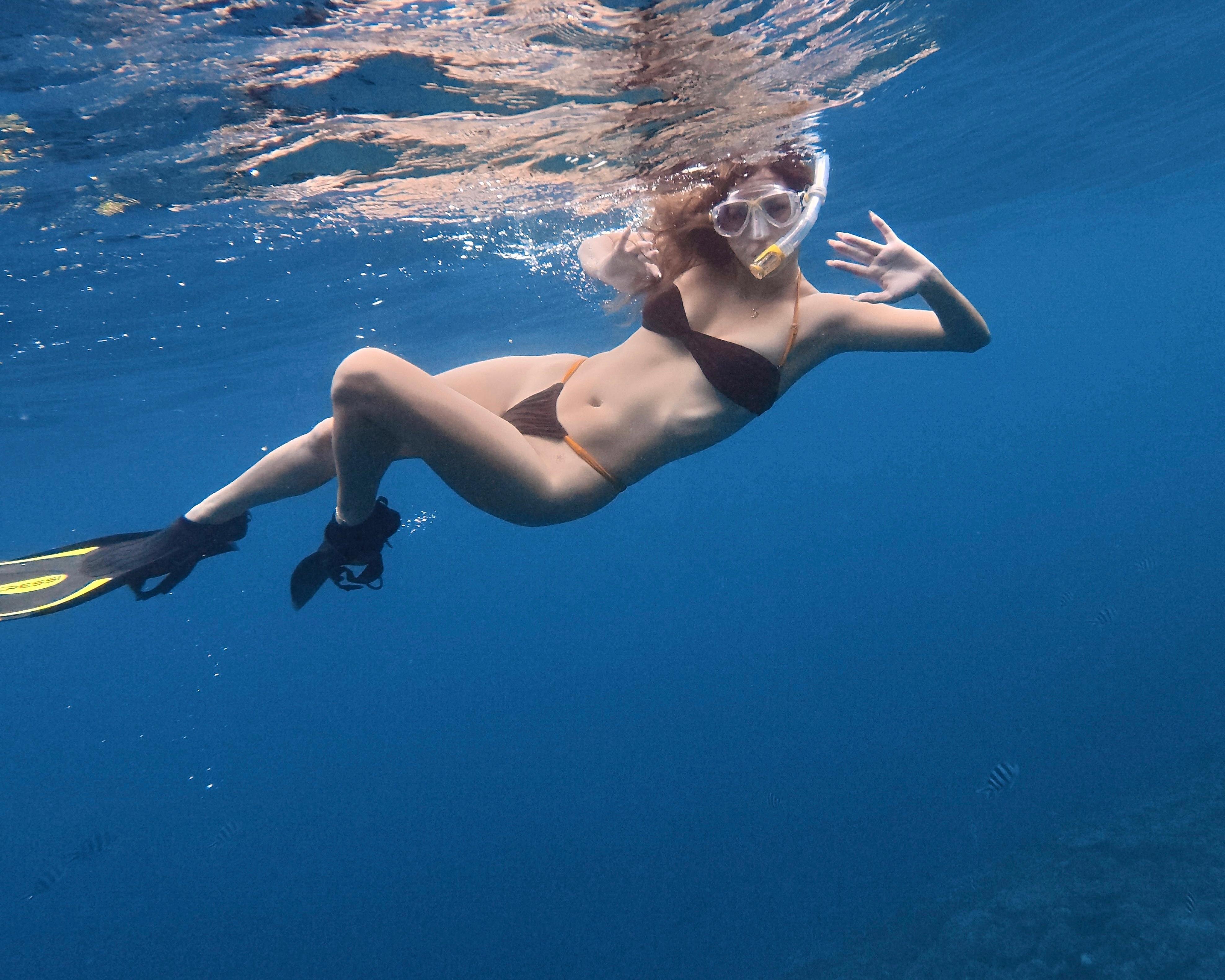
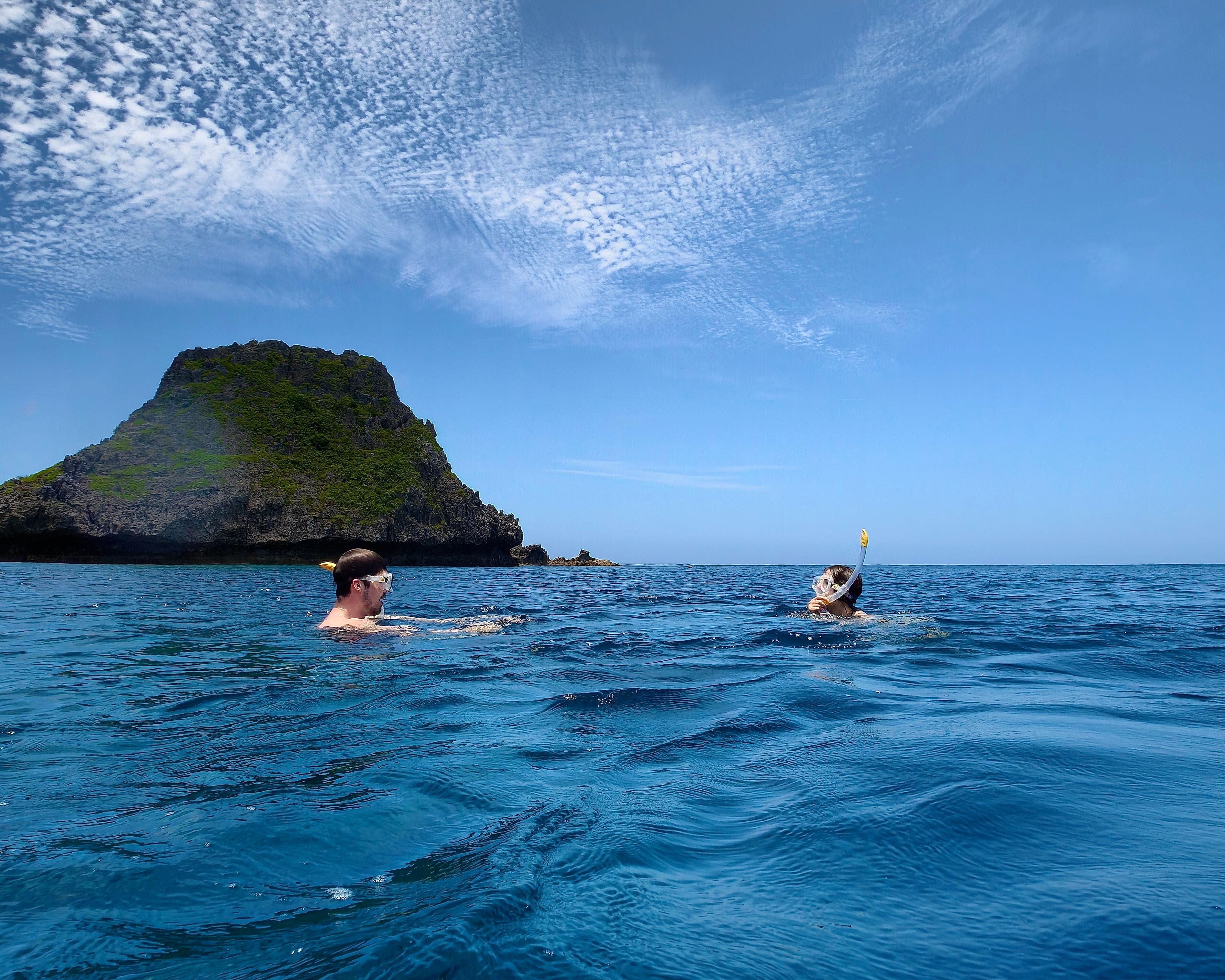
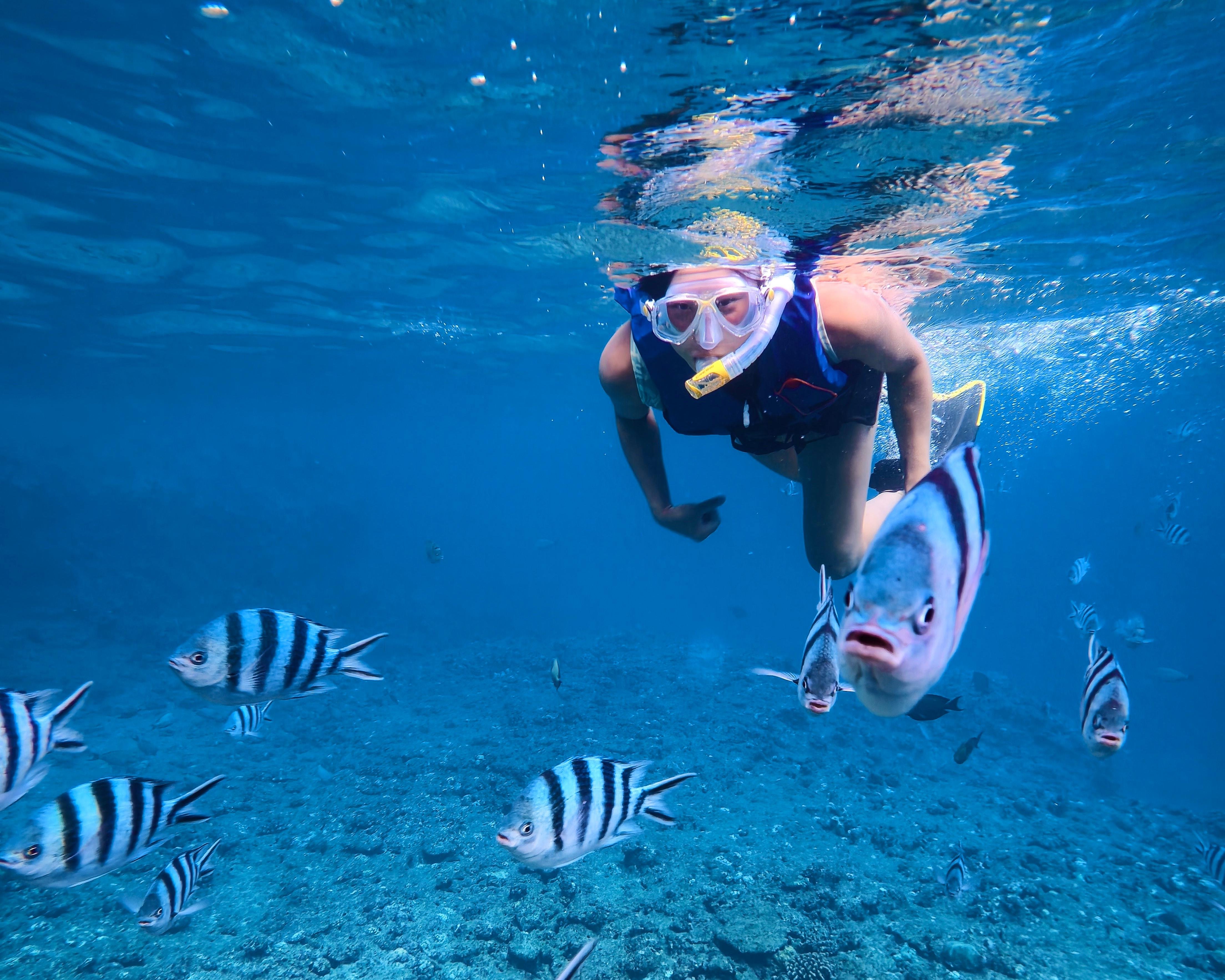
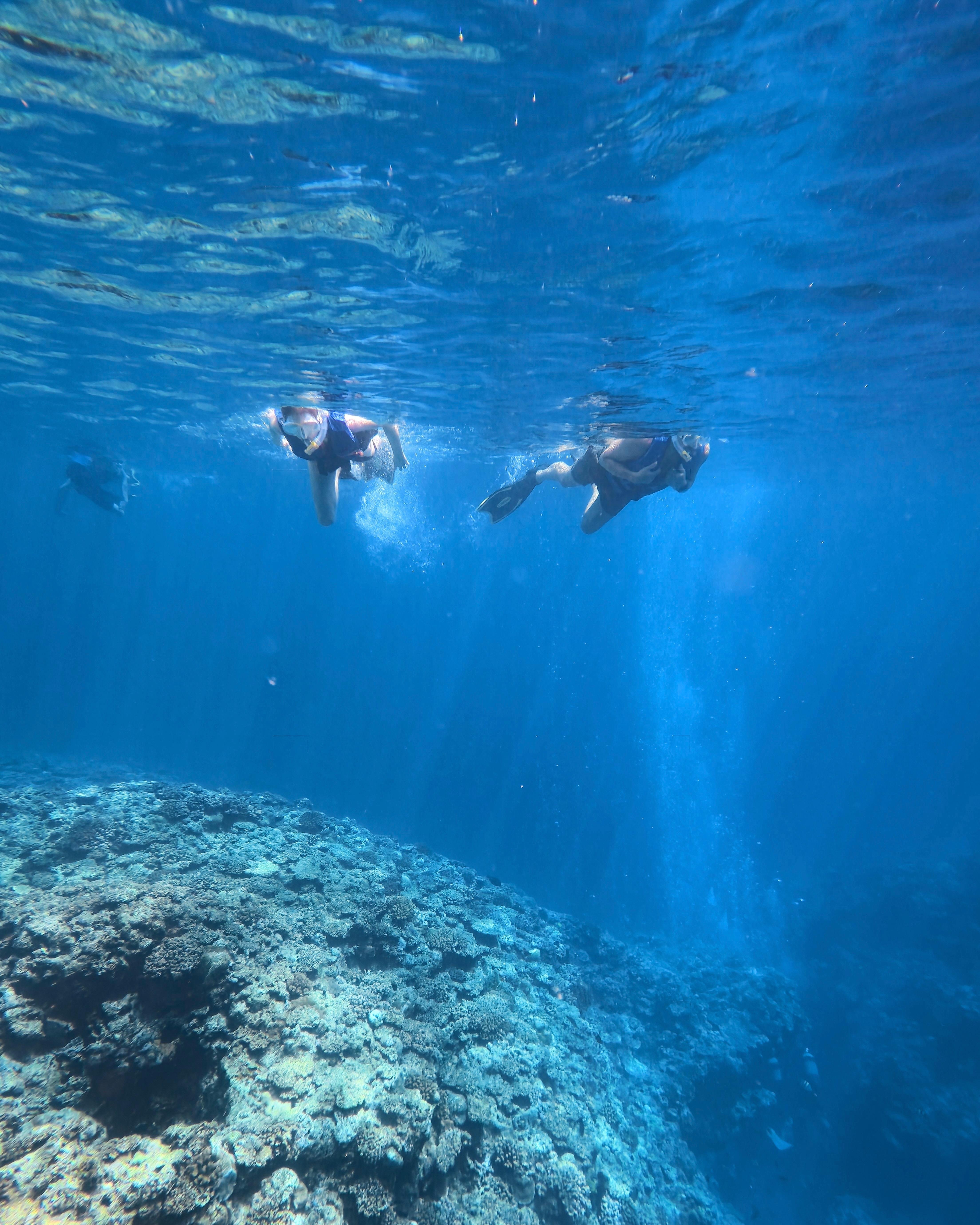
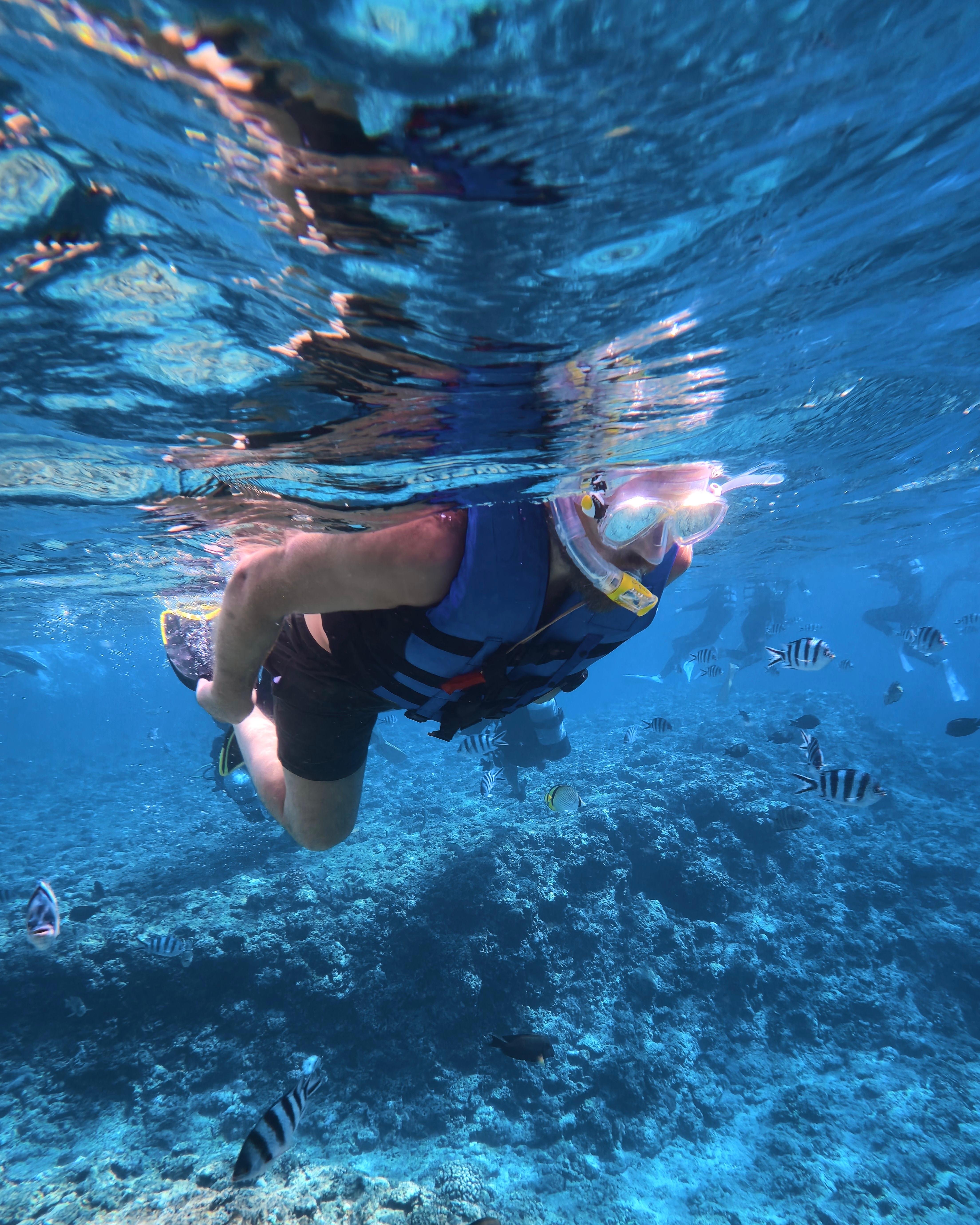
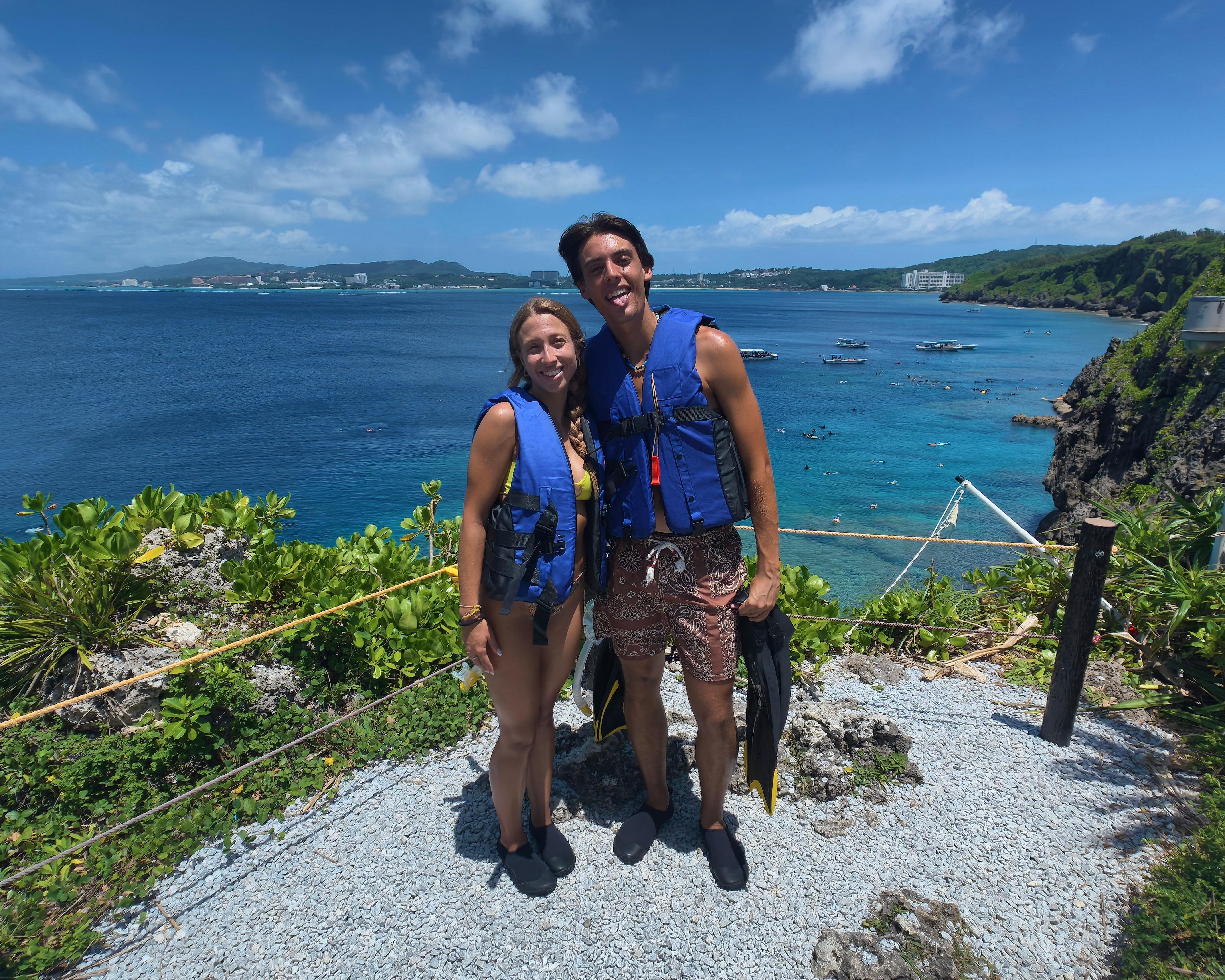
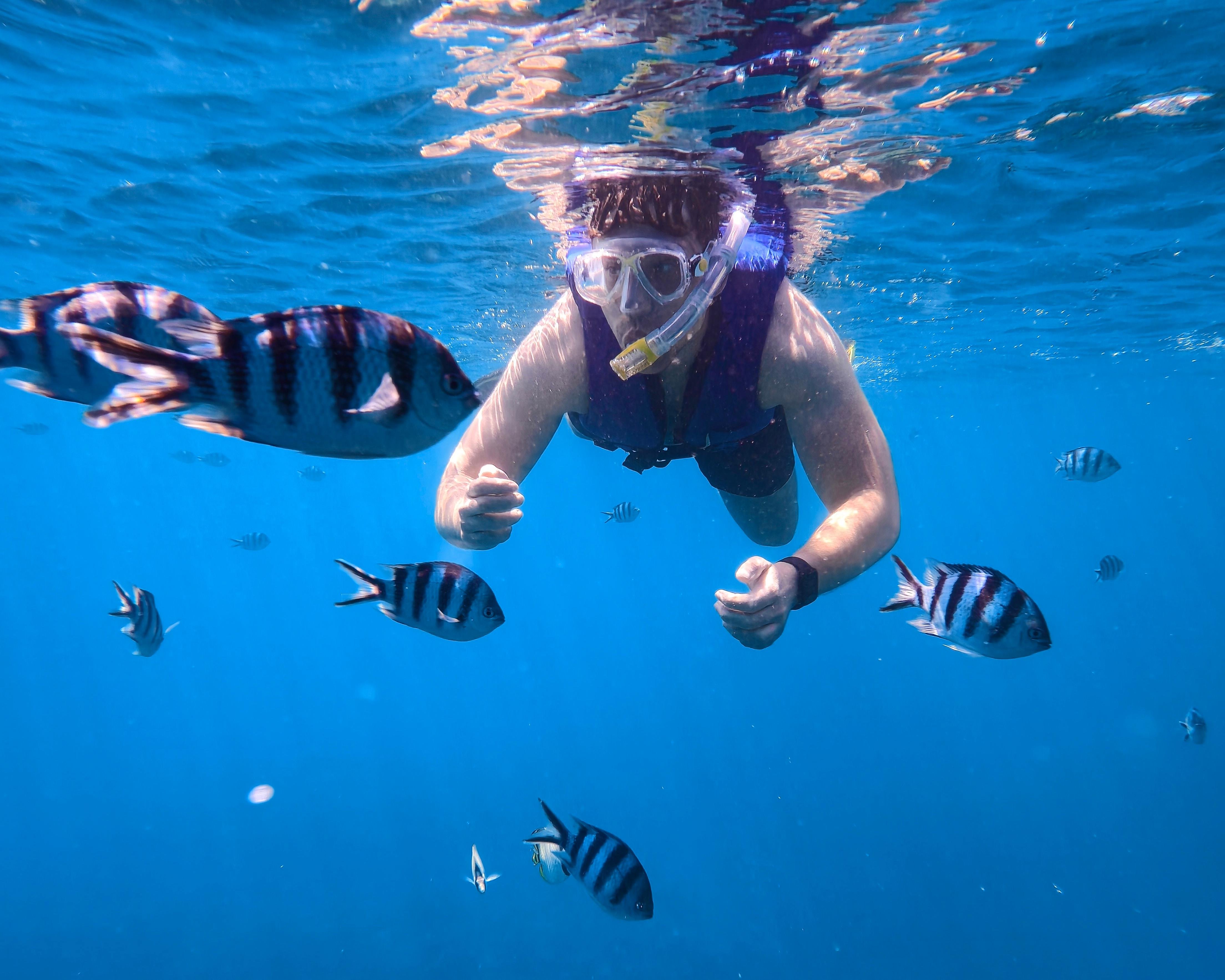
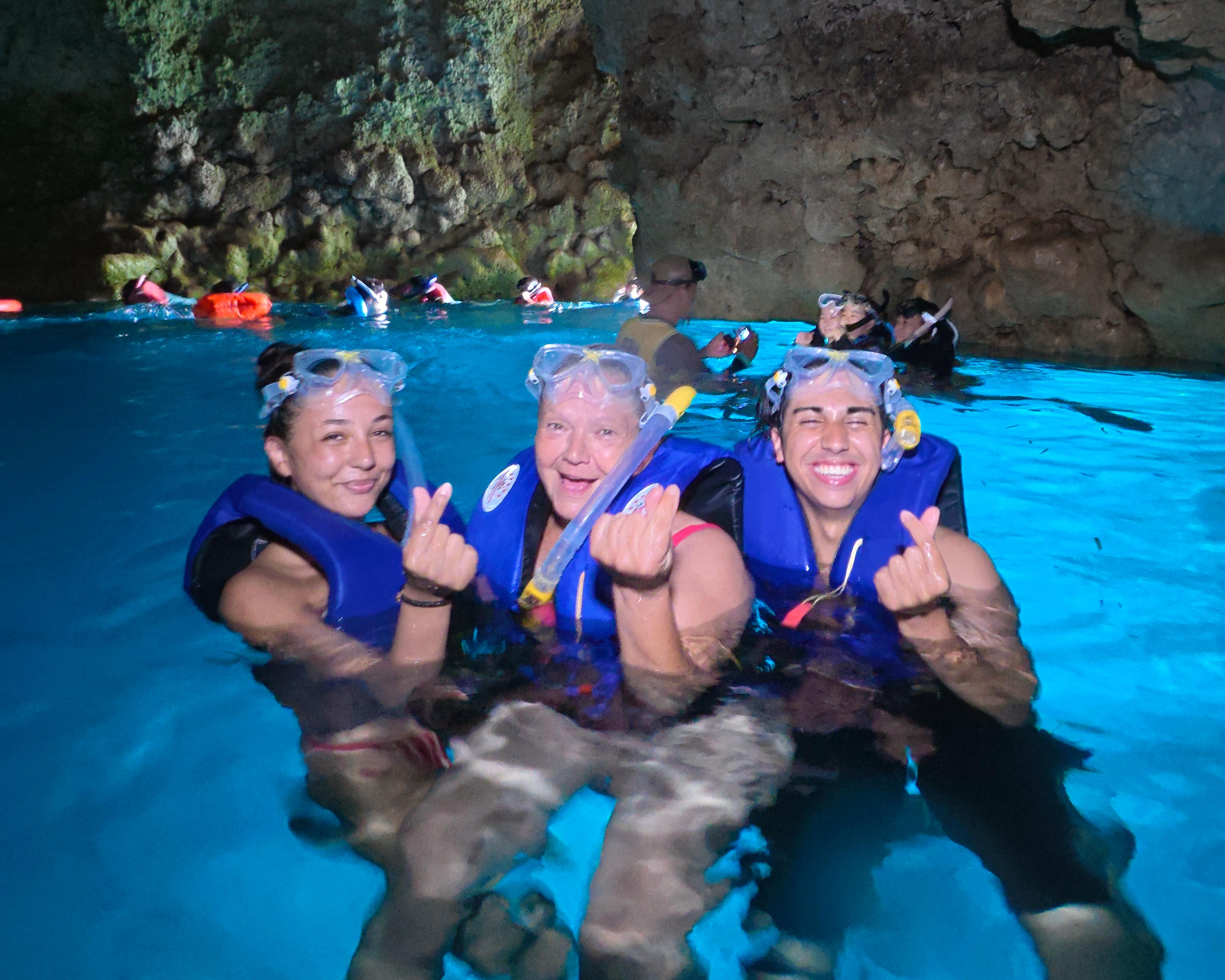
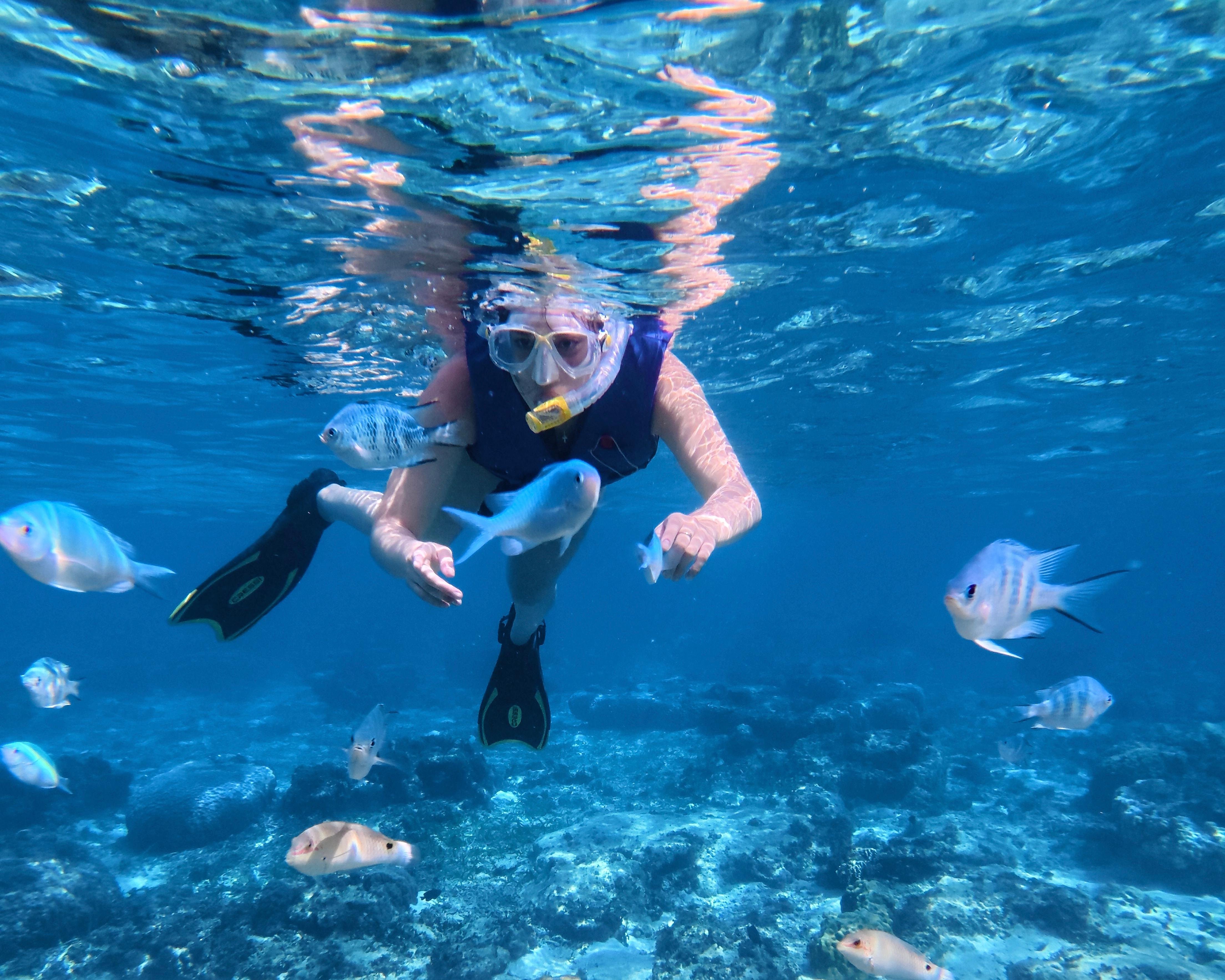
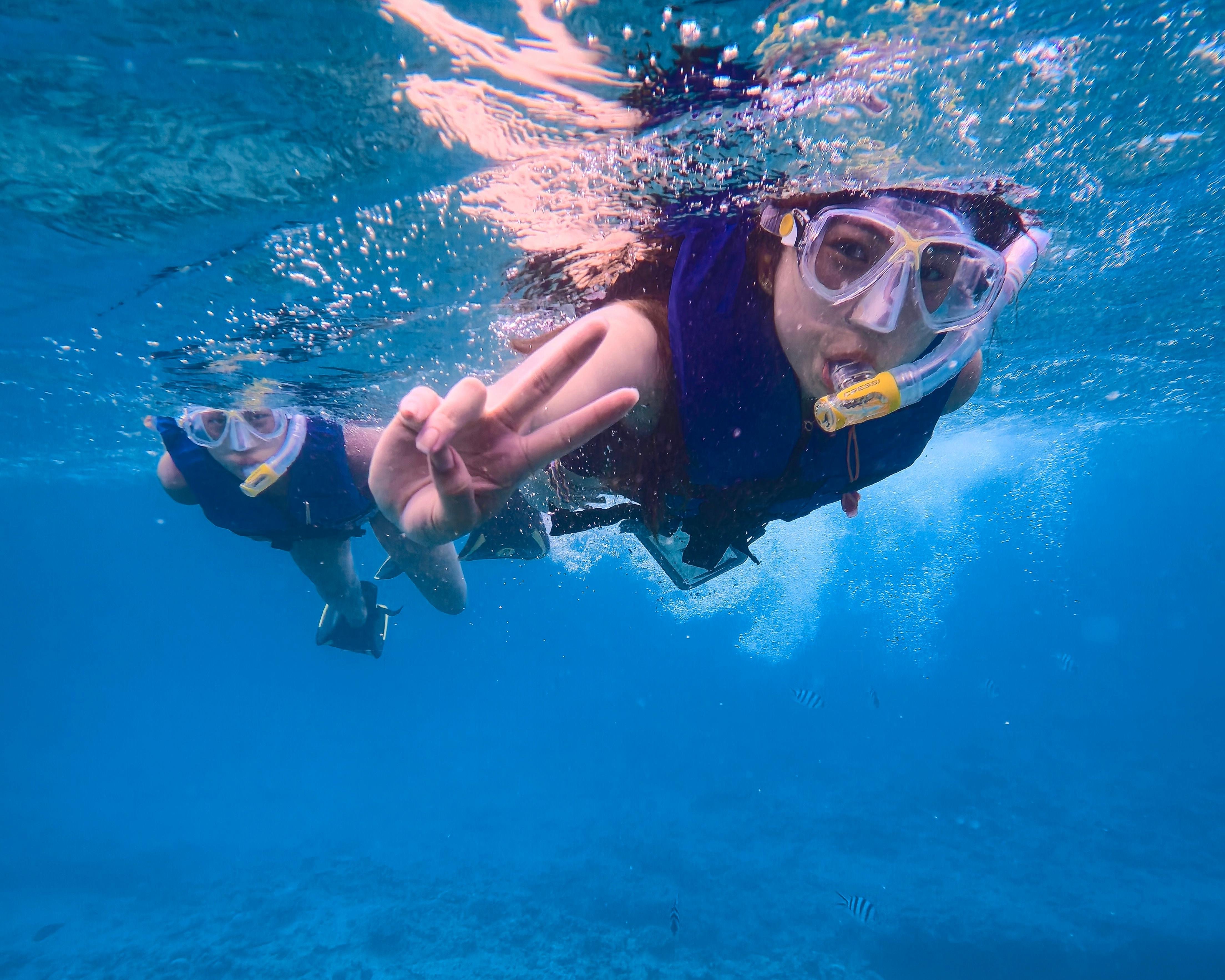
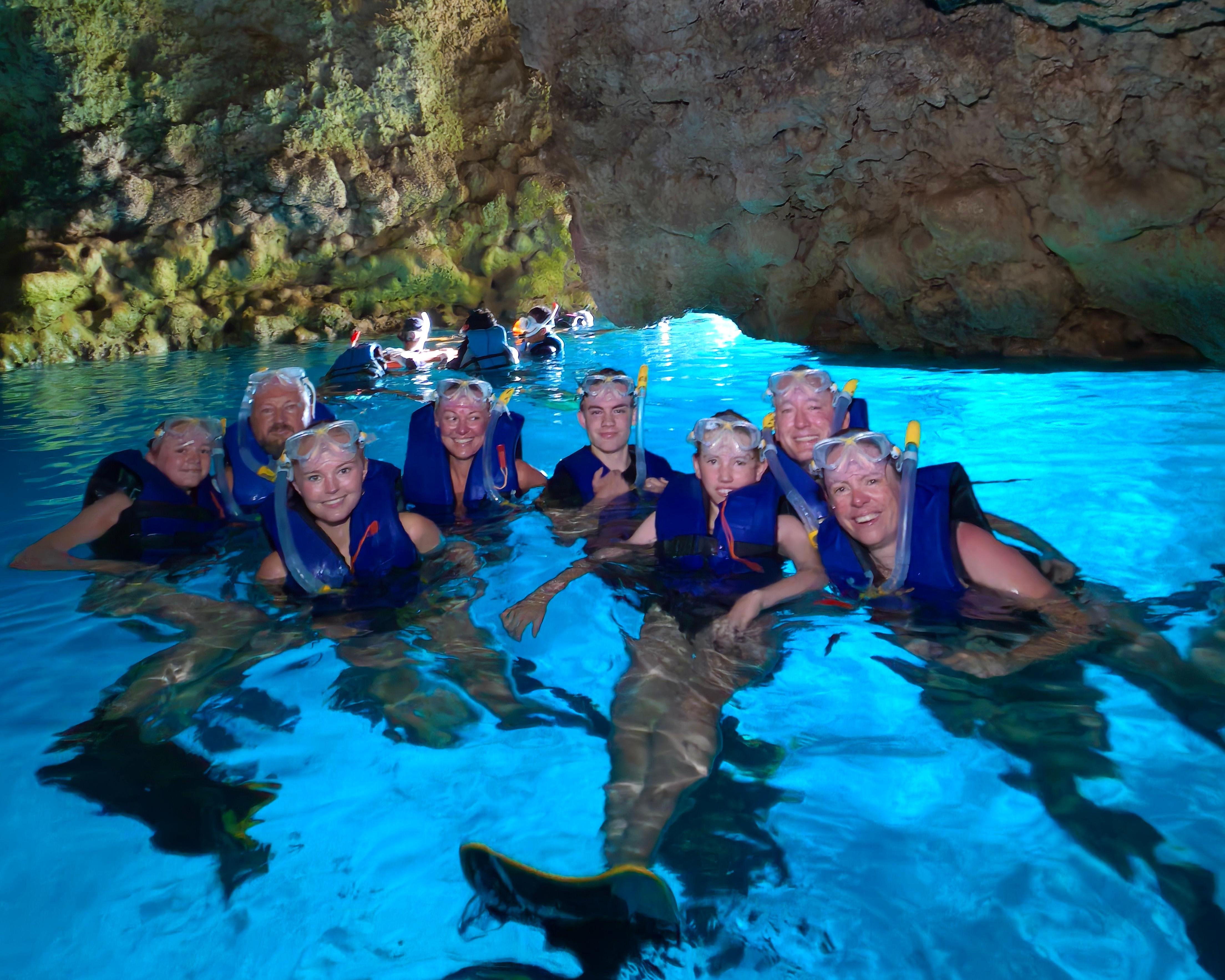
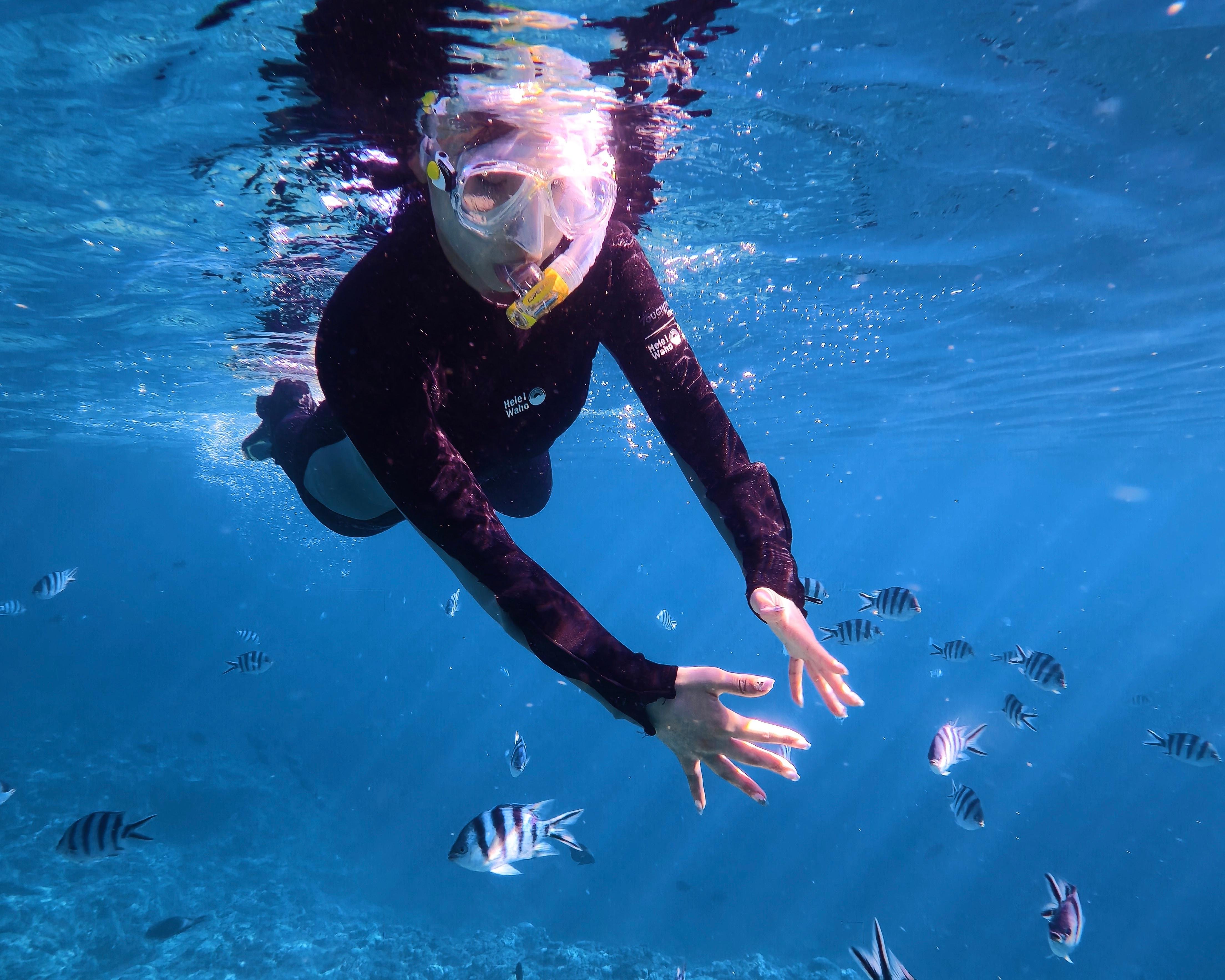
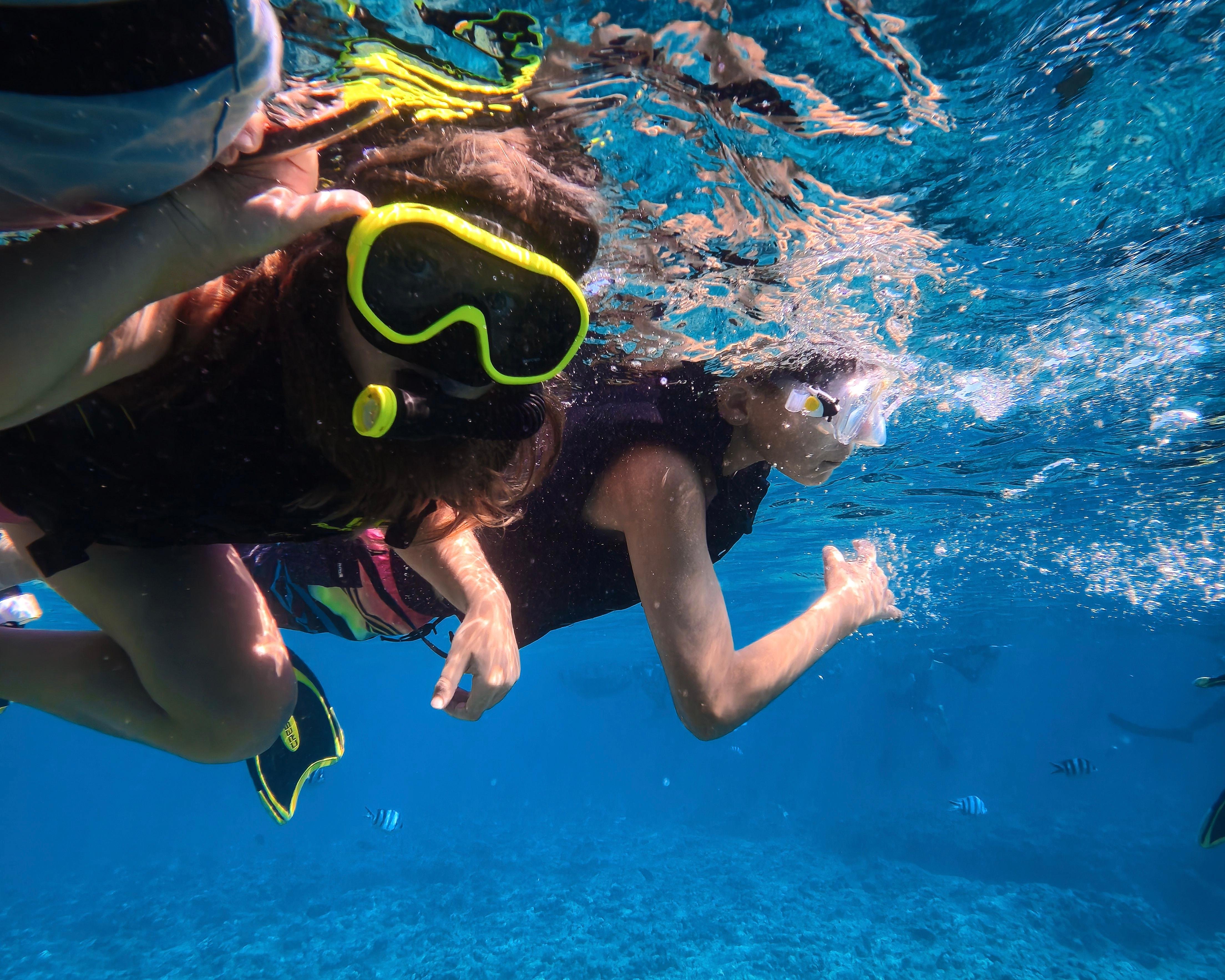
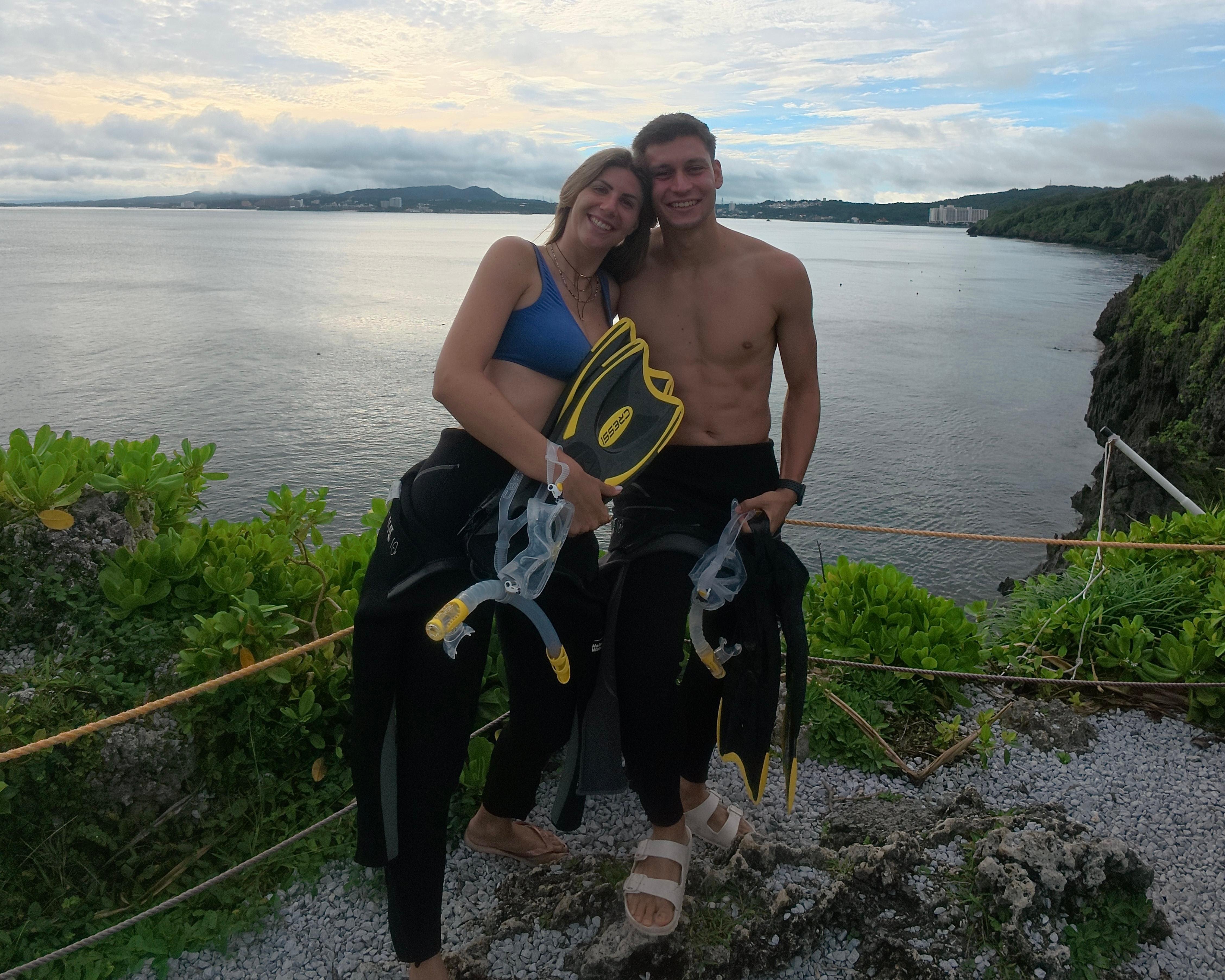
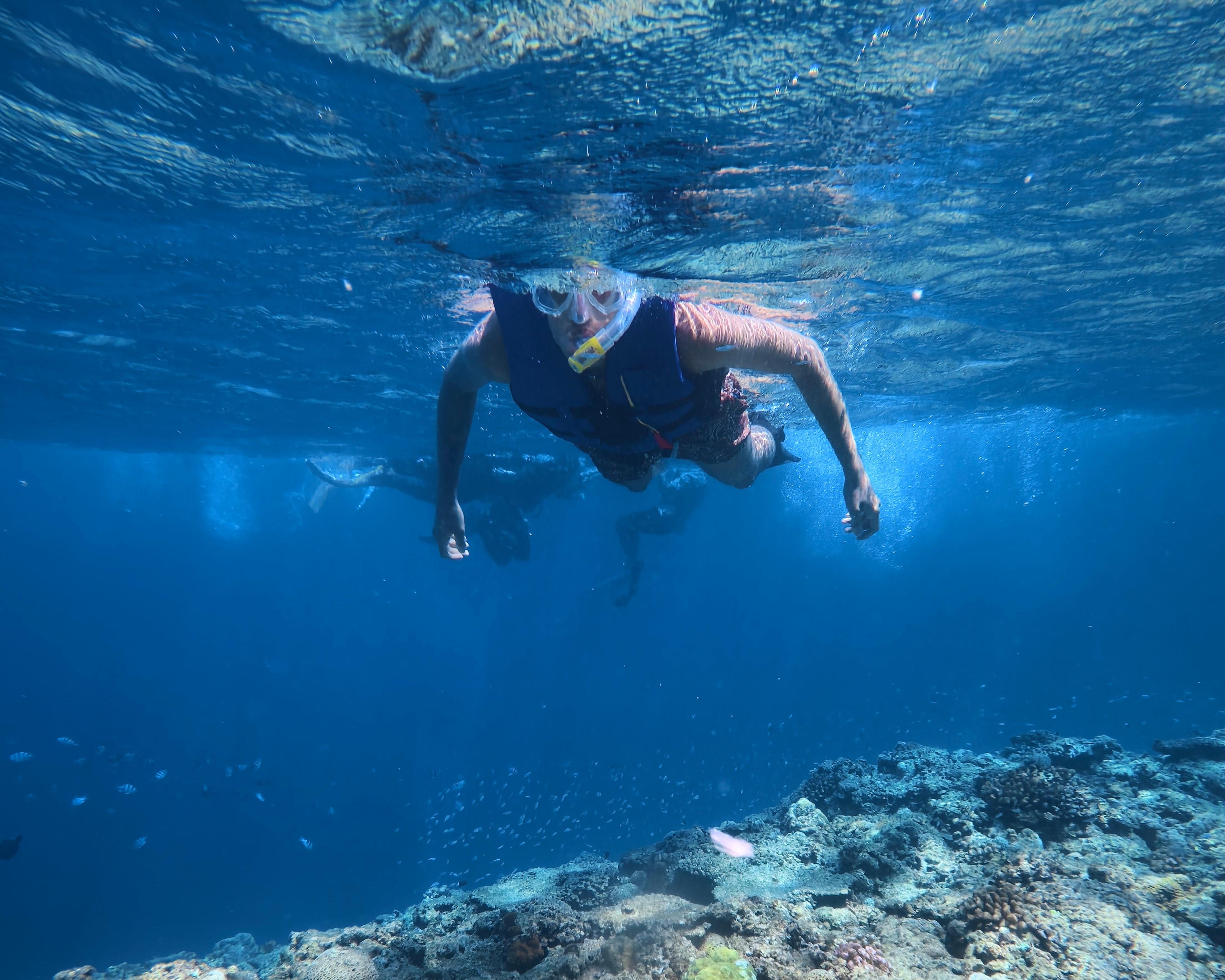
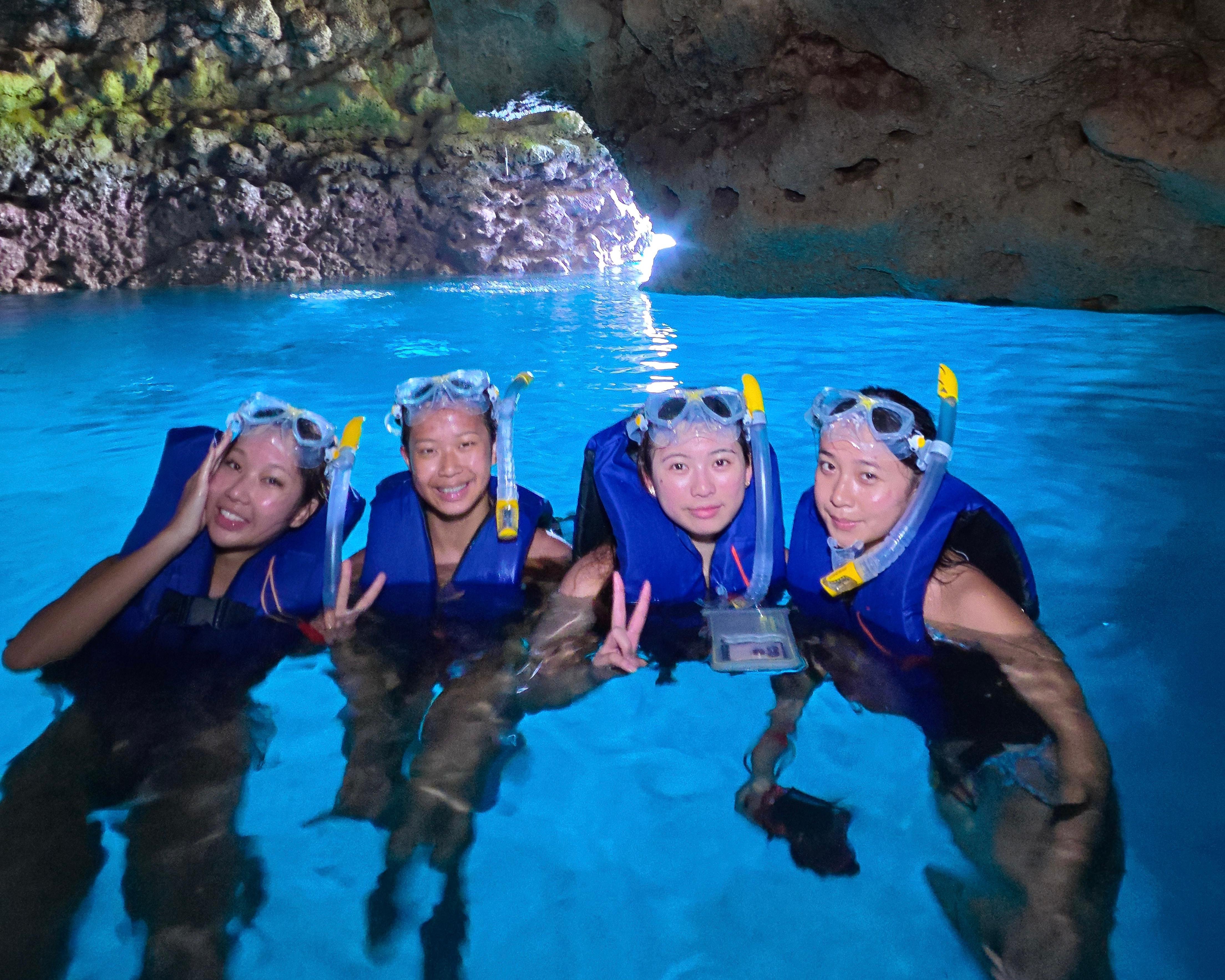
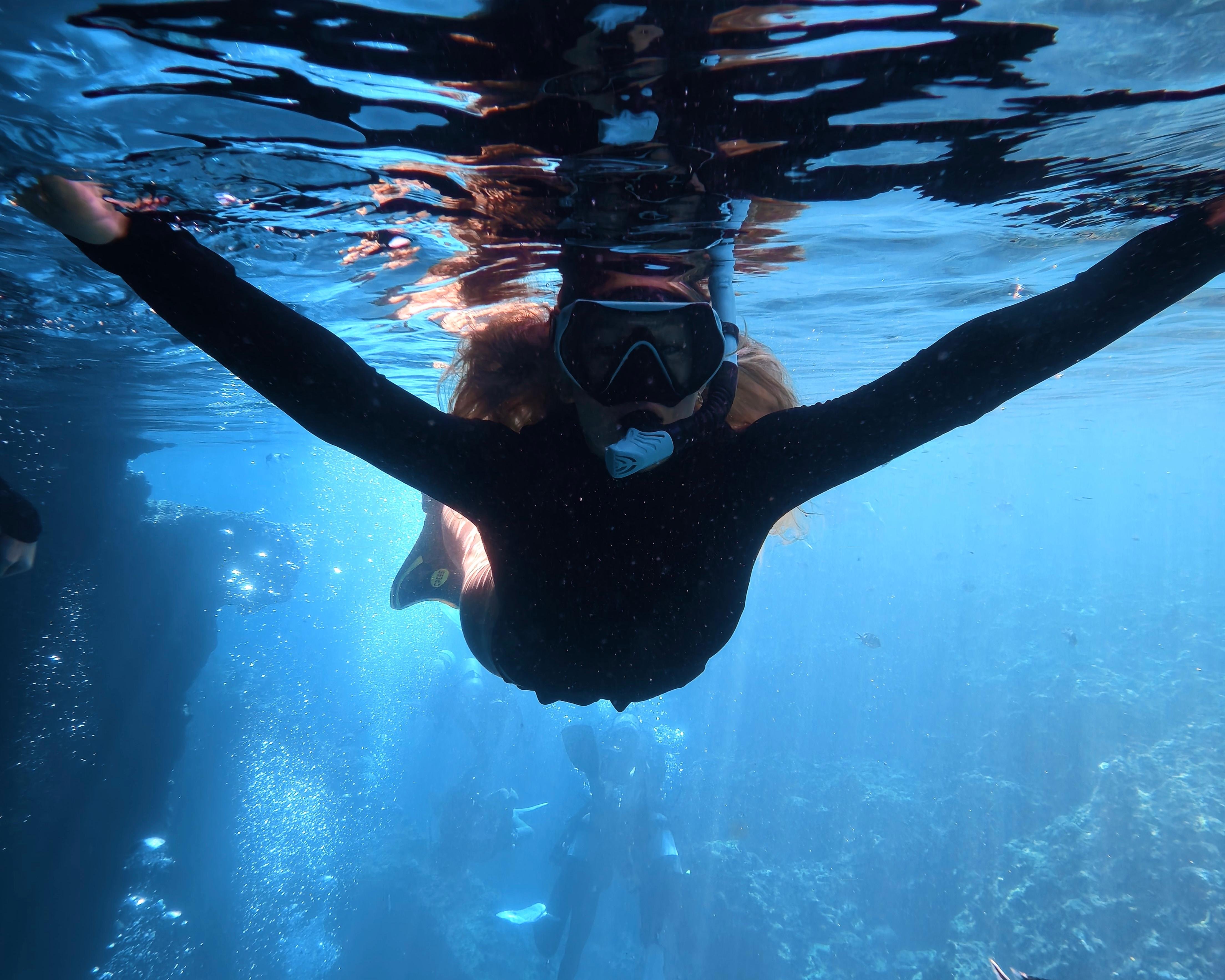
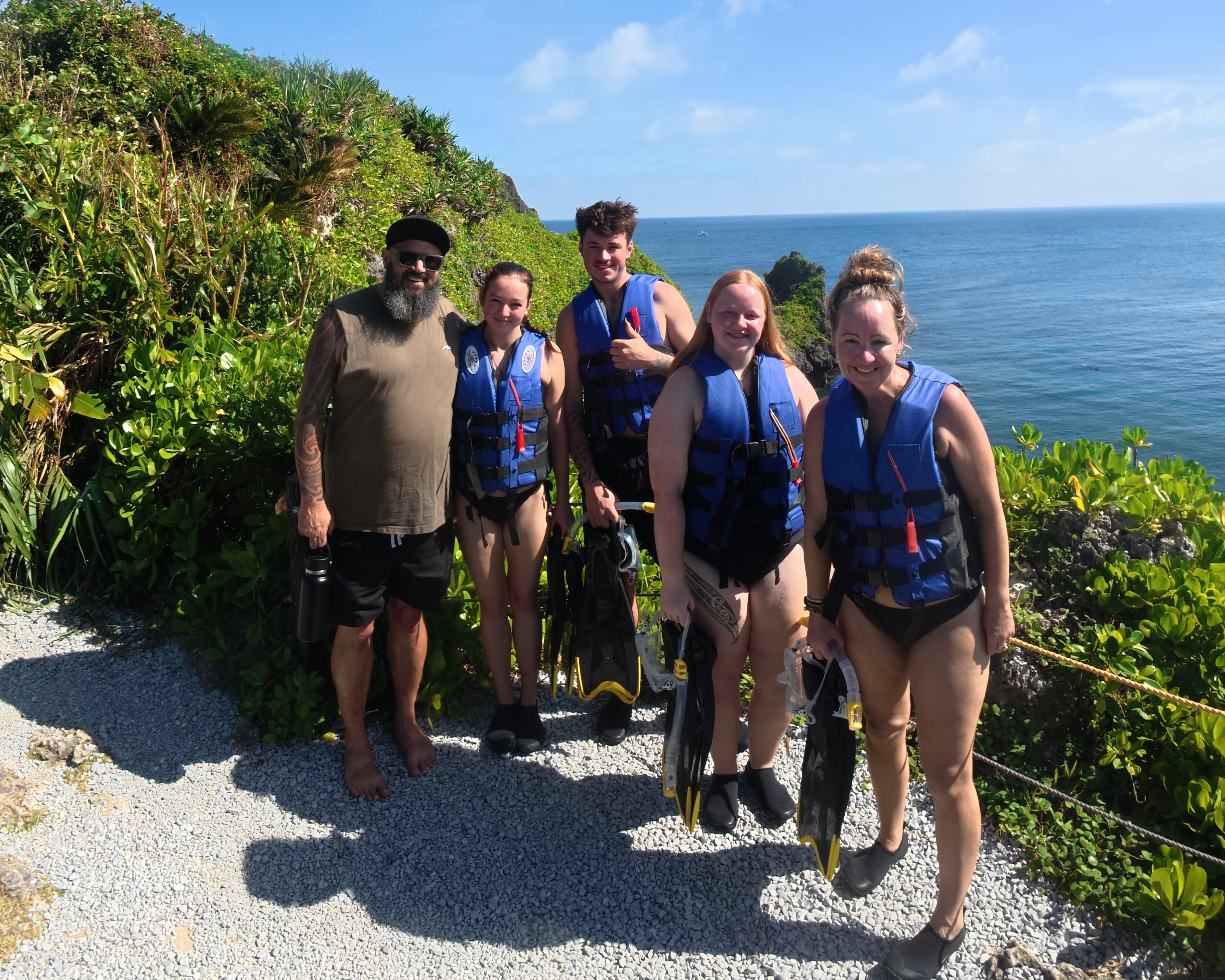
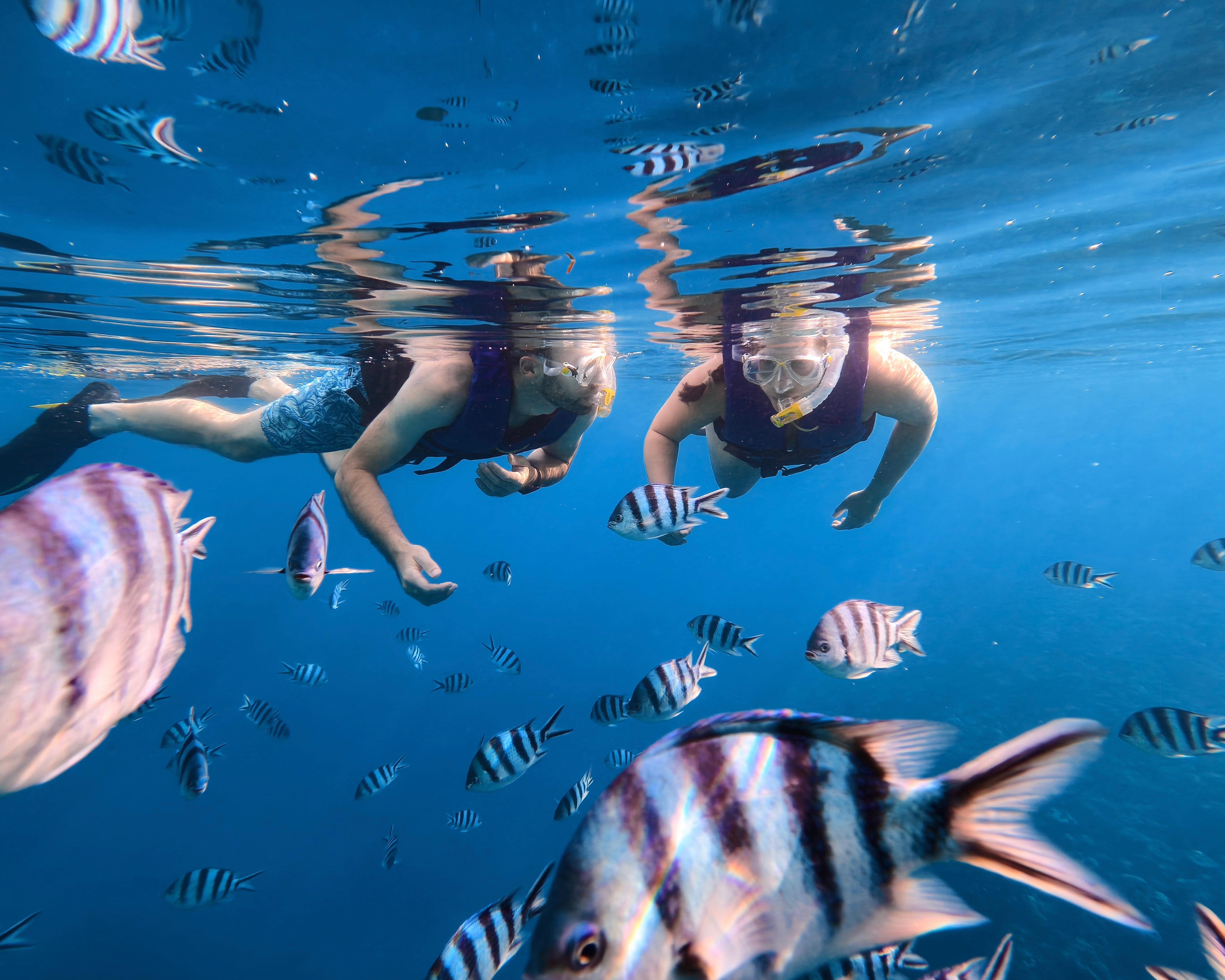
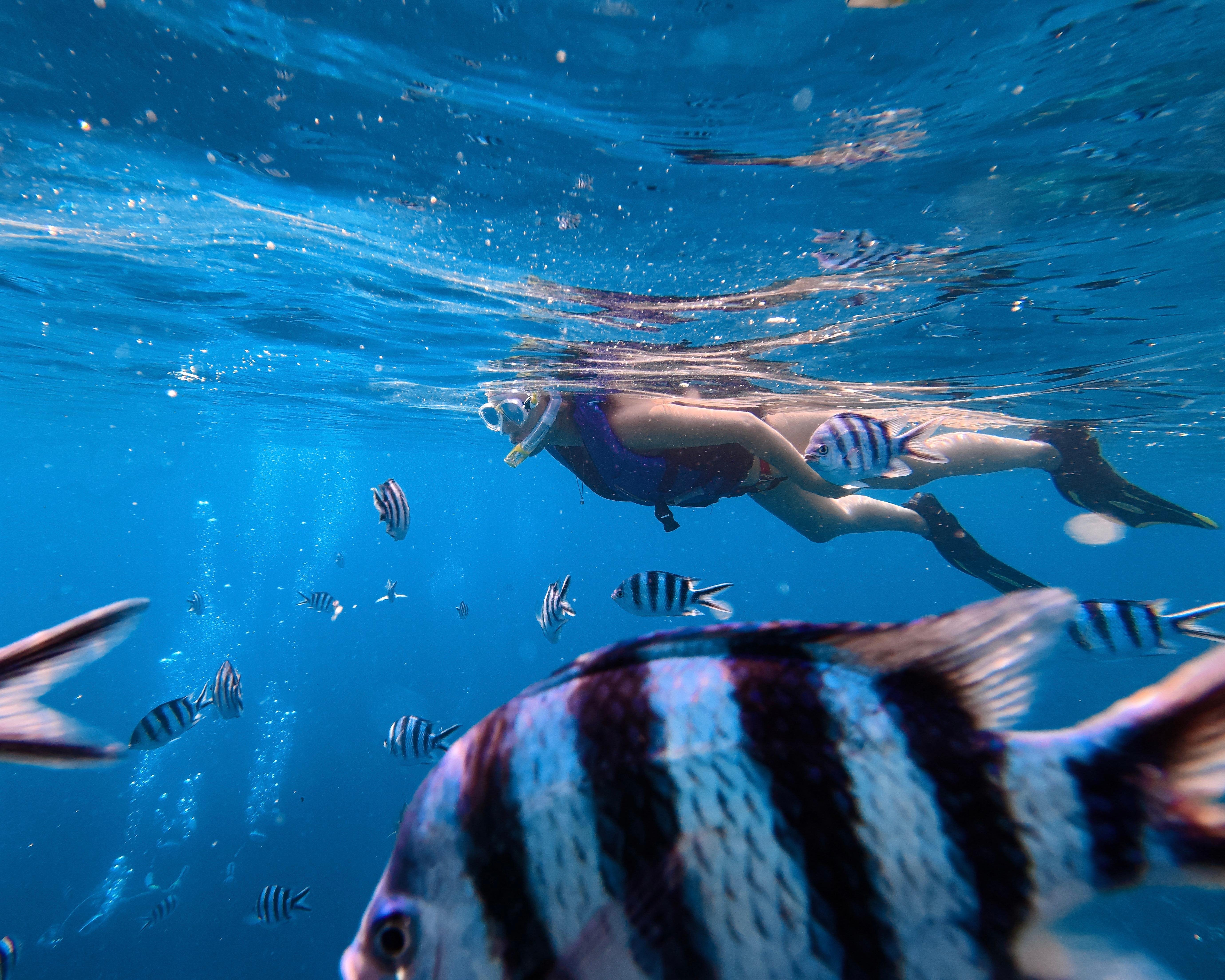
Cape Maeda and the Blue Cave
The limestone headland, the stairs down to the water, and the light inside the cave that the white seabed throws back up.
Book Your Experience
Check Availability & Prices
Select your preferred date and time. Instant confirmation — free cancellation up to 24 hours before departure.
Three Ways Into the Blue Cave
One is nearly free and only works on a blue flag. One works on almost any day the port can launch. Nine of the ten trips here refund you if the cave shuts, so the thing actually worth checking is the age limit. Here is the honest version.
| Feature | OUR PICK Private Shore Trip — Most Reviewed on the Shelf | Boat Entry — Runs When the Stairs Don't | On Your Own — Blue Flag Only |
|---|---|---|---|
| What You Pay | From about $45 per person | From about $40 per person | About ¥500–1,000 (roughly $3–7) in parking and showers |
| Rating | 4.9 / 5 from 156 verified reviews | 4.5 / 5 from 60 verified reviews | Not applicable |
| Works on a Blue Flag | Yes | Yes | Yes — this is the only day it works |
| Works on a Yellow Flag | Yes — a diving company is exactly what the flag requires | Yes | No. The office restricts the water to people with a shop or instructor |
| Works on a Red Flag | Stairs shut; the operator proposes an alternative beach or refunds you | Usually — the red flag closes the stairs, not the sea | No. Nobody uses the stairs |
| Published Upper Age Limit | Listing says 60 in one place and 59 in another — ask before you pay | 58, with photo ID required | None. Nobody checks, and nobody is watching either |
| If the Cave Shuts | Alternative beach offered, full refund if you decline it | Another snorkelling point, full refund if you decline it | Nothing to refund; you have lost the drive, not the money |
| Gear and Life Jacket | Supplied. A life jacket is mandatory at this site | Supplied | Bring your own. The jacket is required, not advisory |
| The Car Park Problem | Still yours to solve unless the shop includes pickup | Meets at a shop or harbour — the cape car park never enters your morning | 180 spaces, full by about 08:00 in high season |
| Photos | Guide shoots stills and short video, included | Free GoPro photos included | Whatever you brought |
| Best For | Anyone booking ahead from abroad who wants the closure risk written down | Tight dates, no car, or a forecast full of northerlies | A confident swimmer with a rental car, a life jacket and a blue flag |
| Check Availability | See the Boat Trip |
The Independent Guide
The Blue Cave, Cape Maeda: What the Flag Decides
Whether you can swim it on your own, what it costs when you can, which trips still run when the stairs shut, and what the Coast Guard's numbers actually say.
Nearly every page about the Blue Cave answers the wrong question. They tell you how beautiful it is — and it is — then bury the one fact that determines whether your morning happens at all: there is a flag on the headland, and it decides for you.
The Cape Maeda Management Office, which runs the site for Onna Village, flies one of three. Blue, and anyone may swim. Yellow, and the water is open only to people with a diving company or an instructor. Red, and the stairs are shut to everyone. The office publishes the current state live, with a camera, at maedamisaki.jp/sea-status, and answers the phone on 098-982-5339 from 8:30, with a closing time that varies by season.
That is the whole decision, and it is knowable before you drive an hour up the coast. Everything below follows from it. Where a figure comes from the management office, Onna Village, the Japan Meteorological Agency or the Coast Guard, we name them. Where the only numbers available come from companies selling the trips, we say that too, and give you the range rather than the flattering end of it.
Can you go to the Blue Cave without a tour?
On a blue-flag day, yes — it is a public site with public stairs, and the whole morning costs ¥500–1,000. On a yellow-flag day, no: the management office’s own English signage limits the water to people accompanied by a diving company or instructor, so a shop is not a convenience, it is the only lawful way in. On a red-flag day nobody uses the stairs, guide or not.
So the honest answer is that it depends on a variable you can check, not on a preference you can hold. Anyone who tells you flatly that you need a tour, or flatly that you don’t, has skipped the flag.
The blue-flag version is genuinely cheap. Parking is ¥100 for the first hour and ¥100 for each hour after. A hot shower is ¥200 for two minutes — short enough that people routinely feed it twice. Lockers and the hair dryer are ¥100. Toilets and changing rooms are free. The machines take coins and ¥1,000 notes only, and will not accept a ¥2,000, ¥5,000 or ¥10,000 note, which is a specific and annoying way to be caught out an hour from anywhere.
Two things are not optional. A life jacket or buoyancy aid is required of snorkellers by the management office, and one operator here cites Okinawa Prefectural Public Safety Commission regulations as the reason, across each of its three listings. And the office states plainly that Cape Maeda is not a swimming beach — no lifeguards, no stinger nets, rapid tidal movement, and no responsibility accepted for anything that happens in the water. There is a life-buoy and an AED at the office, which tells you what they are expecting.
Blue flag
Go on your own
Parking, a shower, your own gear and a life jacket. No booking, no guide, no shop. This is the cheapest good morning available at Cape Maeda and we are not going to pretend otherwise.
What it costs and what to bring →Yellow flag
A shop is the only way in
The office restricts the water to people with a diving company or instructor. On this day the tour is not an upgrade — it is the difference between swimming and standing on the cliff watching.
See what's bookable →Red flag
Only a boat gets there
The red flag closes the stairs, not the sea. Boats out of Maeda Fishing Port still reach the cave mouth. Eight of the ten listings mention boat entry; if your dates are tight, book one of those and stop worrying about the flag.
Which ones go by boat →Shore or boat is not a comfort preference — it is the whole risk
This is the part most guides get wrong, and it is worth being precise about the mechanism.
A red flag is a land-facility decision. The management office closes the staircase because beach entry means standing in the shallows where the waves break, which is the first thing to become dangerous. It is not a closure of the sea area. Boats leave from Maeda Fishing Port and other harbours and approach the cave mouth directly, governed only by each operator’s own judgement and whether the port can launch.
Operators put their own run rates at roughly 35–60% for shore entry against 70–90% by boat. Both ends of both ranges come from companies selling trips — the 35% figure is published by a shop that sells boat tours, and the 60% by a platform that sells both — so read it as a spread, not a measurement. No neutral or official statistic exists, and we looked.
What is not in dispute is the direction, and the reason for it: what closes the cape is wind direction before wind strength. Cape Maeda is an exposed headland facing north. A northerly at 4 m/s can shut it; a southerly at 10 m/s may not. That is why the closure season is October to March, when the northerlies dominate, and why April to September is the calm half of the year. Rain is irrelevant — the cave depends on sea state, and tours run in it.
Boat entry usually costs about ¥1,000 more per person when a shop switches you over on the day.
If it shuts you get your money back. The limit that catches people is the age one.
Two things to settle before you book, and it is the second that actually ends mornings at a shop counter.
The closure question has a reassuring answer. We read all ten Blue Cave listings on this shelf looking for what each operator does when the cape is shut, and nine of the ten publish a policy: they move you to an alternative site, and they refund you in full if you would rather not go. The wording runs from expansive to terse — one reads simply “Point Change: If the Blue Cave is closed, we will guide you to another beautiful snorkeling point. If you prefer not to join the alternative site, you may choose a full refund at any time” — but the substance holds across all nine. Exactly one, a boat trip running out of Naha or Chatan, says nothing about closures at all.
So the flag is a risk to your day, not to your money. That is worth knowing, because a good deal of writing about the Blue Cave implies the opposite.
What genuinely differs is where a shop can move you to, and that is structural rather than contractual. Operators relocate to Ura-Maeda — also called Beach 51 — a sheltered beach about five minutes’ walk from the car park, or to the inner-bay site known as Kumanomi Paradise. A shop that meets you at Cape Maeda itself can realistically only move next door. A shop with its own base, transport and boat can go anywhere, which is how the Kerama Islands trips further down this page end up in the story. Neither substitute is the Blue Cave, and a good operator will say so rather than sell you one as the other.
Now the condition almost nobody mentions: most of these trips have an upper age limit, and it is lower than you would guess.
Eight of the ten publish one. Two stop at 55. One stops at 58, three at 59, and two at 60. Several require photo ID to prove it and state plainly that failing the check on the day is non-refundable — you lose the money and the morning. All ten carry medical exclusions, and the lists are long and broadly similar: heart, lung and ear conditions, asthma, high blood pressure, diabetes, epilepsy, pregnancy, panic disorder and claustrophobia recur right across the shelf. Five publish a weight limit, between 99 and 130 kg.
None of that is arbitrary. It sits directly on top of the Coast Guard figures further down this page, where 70% of Okinawa’s marine-leisure deaths were people aged 50 or over. An operator setting its ceiling at 55 has read the same numbers you are about to.
One thing to ask rather than assume: the trip we feature describes itself in one place as “perfectly tailored for guests aged 6 to 60” and in another as “limited to ages 6–59 for safety”. Those are two different limits on one listing. If anyone in your party is near the line, message the operator before you pay — on any of these trips, not only this one.
See dates and the full conditions →
Is the Okinawa Blue Cave worth it?
Yes, with one honest caveat: you are not visiting a quiet natural wonder, you are queueing for a famous one.
Onna Village counts more than 300,000 users a year at Cape Maeda and estimates peak use at about 7,000 in a single day. The car park holds 180 cars and fills by around 08:00 in high season, staying full until mid-afternoon; 30-minute waits are normal, and so are queues at the cave mouth itself. The village convened its first Over-Tourism Countermeasures Council in September 2024 and has been examining entry restrictions under the Eco-Tourism Promotion Act since. It trialled a carrying capacity of 200 people in the water, did not reach it during the trial window, and concluded it needed to go back and measure the actual peak — which is a fairly honest admission that nobody yet knows how crowded it gets at its worst.
The cave itself earns its reputation. The blue is not a trick of marketing and it is not simply “clear water”. Two things make it. Sunlight entering through the submerged opening travels a long path through seawater, which absorbs the red end of the spectrum strongly and blue weakly, so only blue survives the journey. Then the floor — white Ryukyu limestone — reflects that surviving blue back upward instead of swallowing it. A dark seabed would absorb it and there would be no effect at all. That second half is why it glows rather than merely looking blue, and it is the half most explanations leave out.
On timing, the operators say something counterintuitive and consistent: the difference between slots is crowding, not colour. Enough people have read “go early” that the first slots are now busy, and Okinawa’s sunset runs about 50 minutes later than Tokyo’s, so the last slot of the day is often the emptiest and still bright.
Fish feeding: the objection here belongs to the village, not to us
Onna Village declared itself a “Coral Village” in July 2018 and in April 2020 adopted Green Fins, the UNEP and Reef-World Foundation standard for low-impact diving and snorkelling. It was the first adoption in Japan and the world’s first led by a municipality. Four rules: don’t touch or stand on coral; don’t wear gloves, because they give you the confidence to touch things; don’t feed marine life, because it changes animal behaviour and can alter the ecosystem; take your rubbish home.
Green Fins is voluntary, not law, and the village’s own Green Fins officer has said so plainly — there are operators who do not share the philosophy.
Then the village went and counted. Its FY2024 over-tourism field study found five dive shops still selling fish feeding as a paid service, knowing it is environmentally harmful, because they were afraid of losing customers to competitors who offer it. The same report found shops that did not understand the no-gloves rule, and staff being verbally intimidated for asking shops to register group sizes.
We flag this for the same reason we would flag an animal-welfare issue anywhere else: the objection is not ours and not a campaigner’s. It is the standard the host municipality formally adopted, and the non-compliance is documented by that municipality’s own auditors.
One of the ten Blue Cave trips on this shelf advertises fish feeding in its own listing, naming it four times, once as part of “all gear included”. It is marked on its page and remains bookable, because that is your call and not ours.
A second trip does not mention feeding anywhere in its listing — but a reviewer writing on 1 September 2026 describes being charged ¥1,000 a head for it, and handed stale bread. That is worth more than our objection: it is the village’s own finding, that shops sell feeding as a paid service, corroborated from the paying side. The same reviewer reports the cave “jammed packed with people so you couldn’t move”, says the blue is only really apparent as you swim back out, and is annoyed that everyone was made to wear a life jacket — which is at least a reassuring sign that the rule is enforced.
One practical note, and it is a real limitation: not one of the ten listings mentions Green Fins certification at all. Certification is third-party assessed and ranked bronze, silver or gold, and the certified shops are listed at greenfins.net — but you cannot filter for it on the booking platform, so if it matters to you, check the register against the operator name before you book. Some Japanese booking sites do label certified shops; the international ones do not.
What the safety record says
We would rather state this plainly than leave it out.
The Japan Coast Guard’s 11th Regional Headquarters names Cape Maeda (青の洞窟) on its official Marine Leisure Personal Accident Hotspot Map for Okinawa Main Island, covering 2016 to 2025. That is not a media characterisation; it is a Coast Guard publication. We are not quoting a per-site victim count, because the figures and the location labels sit in separate layers of that PDF and we could not match one to the other with confidence.
The region-wide numbers are unambiguous. Across 2021–2025 there were 469 marine-leisure accident victims in Okinawa and 129 dead or missing. Snorkelling is the deadliest activity in that dataset — 154 victims and 63 deaths, roughly half of all fatalities, more than diving or swimming. 87% of those who died while snorkelling or swimming were not wearing a life jacket. Seventy per cent of all the deaths were people aged 50 or over. 2025 was the worst year since the statistics began in 2001, at 111 victims.
The pattern in that data is not daredevils. The dead skew heavily older, and reported cases at the Blue Cave include deaths in calm, clear water — which points at medical events rather than heroics, and explains why so many operators here cap their upper age. Which makes the Coast Guard’s own two pieces of advice the right ones to repeat: wear the life jacket, and go with someone who knows that water.
When to go, and what the water is doing
Water runs roughly 20°C in February at its coldest and 28–30°C in August at its warmest. These are dive-operator consensus figures rather than Meteorological Agency readings — the JMA publishes regional sea-surface averages, not a nearshore monthly table for Onna — but the shops agree closely with each other. A wetsuit is effectively year-round, and operators supply one. In summer you want a suit or rash guard anyway, for jellyfish rather than for warmth.
The Okinawa Prefecture habu jellyfish advisory runs 1 June to 30 September in 2026. In 2025 the prefecture recorded 199 marine sting and bite cases, 81 of them habu jellyfish. There are no stinger nets at Cape Maeda, because those go up at designated swimming beaches and this is not one. The prefecture’s advice is to cover exposed skin and carry vinegar.
Typhoons are the other calendar. On the JMA’s 1991–2020 normals, 7.7 typhoons approach Okinawa a year, concentrated in August (2.2) and September (1.9). January through March record a flat zero across the entire 30-year period. A typhoon closes the facility outright, usually for one to three days, so if you are booking July to September, read the operator’s cancellation terms as carefully as you read ours.
Taken together: May, June, September and October are the good months — warm water, the best visibility of the year in September, southerly winds, fewer closures. August is warmest and worst: peak typhoons, peak crowds, and the year’s poorest visibility. December to March is cold and closes most often, and compensates with the year’s clearest water, the thinnest crowds, and humpback whales offshore from February to the end of March, visible from the cape’s own observation deck.
Getting there
Cape Maeda is about 50–54 km and an hour’s drive from Naha Airport via the expressway, with a toll around ¥610 using ETC. A taxi from the airport runs to about ¥10,000.
Public transport is possible and not recommended. Bus route 120 from Naha Airport to the Kurawa stop takes around 90 minutes, and the management office puts the walk from there at about 20 minutes — uphill, in Okinawan summer sun. Published fares sit between ¥1,200 and ¥1,360 depending on which source you read, and all of them are stale. Okinawa has no railway on this coast.
Which is the strongest practical argument for a tour that has nothing to do with the cave: many shops include hotel pickup, and boat-entry trips meet at a shop or harbour rather than at the cape. Both remove the car park from your morning entirely, and the car park is the part that fills at eight.
One caution if you are driving: the official site publishes its own opening hours three different ways — 7:00–19:00 flat on one page, a seasonal 7:00–18:00 or 19:00 split on another, and a month-by-month table on the English version. Phone 098-982-5339 rather than trusting any of them. The site closes 1–3 January, and without notice for typhoons.
Figures on this page were checked in September 2026. Prices, ratings and review counts come from the booking platform and move; the flag moves faster than anything else here, so check it on the day.
Guest Reviews
What Visitors Say
4.9/5
from 156 verified guests
"Yuki is a friendly guide! He takes the time to explain everything and reassures you if things don't work out for a while. Unfortunately, due to weather conditions, we could not snorkel at Blue Cave, but Yuki had informed us about this in time. We went to a nearby beach where we saw super beautiful fish and coral! 🤩"
"We are a family of four, inc two late teens, from England. Our guide, Go, was just brilliant explaining everything and helping us with our fins and snorkels. He took lots of photos and videos of us in the water, featuring many colourful fish. We would highly recommend this activity - it was easy to find, easy to park, everything you need is provided and the sea was just lovely and full of the most beautiful fish and other sea creatures. The caves really are very blue. Overall, a fabulous morning 🐠🇯🇵🥰"
"Although we couldn't go to the Blue Cave because of the weather, the alternative was extraordinary. And the tour guide was great, very kind and friendly. The photos were wonderful!"
"A really great snorkel tour in Okinawa. Our tour guide, Yuki, was great. A unique experience and an absolute highlight of our trip."
"A very nice private tour for our family of 4. Our guide was very nice and spoke excellent English. We felt very comfortable and safe. Unfortunately, the Blue Grotto was not accessible due to excessive waves, so we did the snorkeling tour instead. We saw a lot of colorful fish; it was just great! We can only recommend this tour!"
"The snorkeling was absolutely amazing! We had a fantastic tour guide, and there were beautiful corals and lots of fish in the area. I can highly recommend it!🐠🐡🐟🤿🦀🦈🦐🦑"
"Thank you very much, Go, for this wonderful experience. It was a pleasure to meet you 💙"
Read all 156 verified reviews
See All ReviewsThe Most-Reviewed Blue Cave Trip on the Shelf
A private guide rather than a group, and the clearest closure wording on the shelf: an alternative beach offered, and a full refund if you would rather not take it. Rated 4.9/5 by 156 verified guests — more than twice the review count of any other Blue Cave trip here — from about $45, with free cancellation. Starting from $45 per person.
Check Availability & BookCan't Make These Dates?
Browse More Available Options
Find a tour that fits your schedule — all with instant confirmation and free cancellation.
Blue Cave Okinawa FAQ
The questions people actually type into Google before booking — answered in the first sentence, explained in the ones after.
On a blue-flag day yes, and it costs about ¥500–1,000. On a yellow-flag day no — the Cape Maeda Management Office restricts the water to people accompanied by a diving company or instructor. On a red flag the stairs are shut to everyone. That is the whole answer, and it is the reason a flat yes or a flat no is always wrong: the site publishes its own status live, with a camera, at maedamisaki.jp/sea-status, and answers the phone on 098-982-5339. On a blue flag you need no certification to snorkel, no booking and no guide — parking is ¥100 an hour, a hot shower ¥200 for two minutes, toilets and changing rooms free. Two conditions do attach: a life jacket or buoyancy aid is mandatory for snorkellers, and the office states plainly that Cape Maeda is not a swimming beach — no lifeguards, no stinger nets, and no responsibility accepted for what happens in the water. The full cost and rules breakdown is here.
Yes — but go in knowing it is one of the busiest single spots in Okinawa, not a hidden one. Onna Village counts more than 300,000 users a year at Cape Maeda and estimates peak use at about 7,000 in a single day; the village convened its first Over-Tourism Countermeasures Council in September 2024 and has been examining entry restrictions since. The 180-space car park fills by around 08:00 in high season, and queues form at the cave mouth itself. The cave earns its reputation anyway, and for a reason most explanations only half-tell: sunlight entering through the submerged opening loses its red wavelengths on the way through the water so only blue survives — and then the floor, white Ryukyu limestone, reflects that blue back upward instead of absorbing it. A dark seabed would kill the effect entirely. Operators also agree on something counterintuitive: the difference between time slots is crowding, not colour.
Two ways in, and they fail under different conditions: down roughly 100 public stairs from the Cape Maeda plateau, or by boat from Maeda Fishing Port to the cave mouth. The stairs are the cheap way and the first to close — a red flag shuts them, because beach entry means standing in the shallows where the waves break. A red flag does not close the sea, so boats keep running; operators put their own run rates at roughly 35–60% for shore entry against 70–90% by boat, though both figures come from companies selling trips, so treat them as a range rather than a measurement. Boat entry typically costs about ¥1,000 more per person when a shop switches you over on the day. Eight of the ten Blue Cave trips on this shelf mention boat entry. How to check which kind of day you are having is here.
Yes — snorkelling is the main activity there and needs no certification of any kind. A life jacket or buoyancy aid is required by the management office, and one operator here cites Okinawa Prefectural Public Safety Commission regulations as the reason across each of its three listings. Check the age limits too: eight of the ten Blue Cave trips publish an upper one, two of them at 55. Diving is also available in three forms: a trial dive, which needs no C-card but must be supervised by an instructor throughout; fun diving, which does require a C-card; and freediving with an instructor. Shops commonly accept children from around age 10 for a trial dive and younger for snorkelling, and typically ask for a medical declaration over about 60. One honest note on safety data rather than marketing: across 2021–2025 the Japan Coast Guard recorded snorkelling as the deadliest marine-leisure activity in Okinawa — 154 victims and 63 deaths, about half of all fatalities, ahead of diving — and 87% of those who died while snorkelling or swimming were not wearing a life jacket.
Yes, when the flag allows it — which is a real condition and not a formality. Blue means anyone may swim. Yellow means the water is open only to people with a diving company or instructor. Red means nobody goes down the stairs. The Cape Maeda Management Office decides daily on sea state and signals it by flag, signage and a loudspeaker announcement. No numeric wave-height threshold is published; what operators consistently describe is that wind direction matters more than wind strength, and both matter more than wave height. The cape is an exposed headland facing north, so a northerly at about 4 m/s can close it while a southerly at 10 m/s may not. That is also why closures cluster from October to March, when northerlies dominate. Rain is irrelevant — tours run in it.
Yes — from the bottom of the Cape Maeda stairs it is a short surface swim along the cliff to the cave mouth, and most people do exactly that rather than arriving by boat. It is not a long-distance swim and it does not require any special ability beyond being comfortable in open water with a life jacket. What it does require is the sea being calm enough that the management office has not closed the staircase, since the difficult part is the entry and exit through the shallows rather than the swim itself. The office describes tidal movement at the cape as rapid and potentially dangerous, and it is not a monitored swimming beach. If conditions are marginal or you would rather skip the shore entry entirely, a boat drops you at the cave mouth and removes that section of the trip altogether.
You get your money back: nine of the ten Blue Cave listings publish a relocation-and-refund policy, and exactly one says nothing at all. The usual substitutes are Ura-Maeda, also called Beach 51, a sheltered beach about five minutes' walk from the Cape Maeda car park, and the inner-bay site known as Kumanomi Paradise. Neither is the Blue Cave. There is also a structural difference worth checking: a shop that meets you at the cape itself can generally only move to the adjacent beach, whereas a shop with its own base and boat can go anywhere. The trip we feature puts it directly — an alternative beach proposed, and a full refund if you would rather not take it — and eight others say the same in their own words. The single exception is a boat trip out of Naha or Chatan, whose listing never mentions closures; ask before booking that one. The condition far more likely to catch you is not the closure policy at all: eight of the ten publish an upper age limit, two of them at 55, several requiring photo ID with a non-refundable failure on the day.
Budget three to four hours at Cape Maeda including parking, changing and showers, of which the in-water part is typically 40 to 60 minutes and the cave itself perhaps 15 to 20. Most guided trips run one and a half to two hours door to door for the water portion. The variable that swallows time is not the cave, it is the car park and the queue: 180 spaces, full by around 08:00 in high season and often still full at 15:00, with 30-to-60-minute waits reported, and further queues of half an hour or more at the cave mouth in peak season. Operators point out something useful about scheduling — so many people have read "go early" that the first slots are now busy, and because Okinawa's sunset runs about 50 minutes later than Tokyo's, the last slot of the day is frequently the emptiest while still being bright.
¥100 for the first hour and ¥100 for each hour after, for a car or motorcycle. A microbus is ¥300 then ¥150 an hour; a large bus ¥500 then ¥200. There are 180 car spaces, five large-vehicle bays and four accessible spaces. Separately: a hot shower is ¥200 for two minutes, the hair dryer ¥100 for four and a half minutes, and a coin locker ¥100; toilets and changing rooms are free. The machines take coins and ¥1,000 notes only — not ¥2,000, ¥5,000 or ¥10,000 — which is a specific way to get caught out an hour from the nearest city. Shampoo and body soap are banned in the showers for environmental reasons. A realistic three-to-four-hour self-drive visit comes to about ¥500–1,000 all in. Note that the official site publishes its opening hours three different ways across its own pages, so phone 098-982-5339 rather than trusting any single version.
Three things, in order: not wearing a life jacket, the habu jellyfish season, and assuming the site is supervised. The Japan Coast Guard's 11th Regional Headquarters names Cape Maeda on its official Marine Leisure Personal Accident Hotspot Map for 2016–2025. Region-wide across 2021–2025 there were 469 marine-leisure accident victims in Okinawa and 129 dead or missing, with 87% of those who died snorkelling or swimming not wearing a life jacket, and 70% of all the dead aged 50 or over. Reported Blue Cave fatalities include deaths in calm, clear water, and the dead skew heavily older — which points at medical events rather than risk-taking, and is why eight of the ten trips here cap their upper age. The Okinawa Prefecture habu jellyfish advisory runs 1 June to 30 September; in 2025 the prefecture logged 199 marine sting cases, 81 of them habu, and there are no stinger nets at Cape Maeda because it is not a designated swimming beach. Long-spined sea urchins are present. Cover exposed skin, carry vinegar, and wear the jacket.
May, June, September and October are the best months; August is the worst despite being the warmest. operators put September's visibility, the year's best, at roughly 25–35 m, and the southerly winds of April to September mean far fewer closures. August brings peak crowds, the year's poorest visibility, which the same shops put at around 15–20 m, and the peak of typhoon season — on Japan Meteorological Agency 1991–2020 normals, 7.7 typhoons approach Okinawa a year, concentrated in August (2.2) and September (1.9). A typhoon closes the facility outright, usually for one to three days, so read your operator's cancellation terms carefully if you are booking in that window. January through March record a flat zero typhoon approaches across the entire 30-year period, and compensate for cold water and frequent northerly closures with the clearest water of the year, the thinnest crowds, and humpback whales offshore from February to the end of March, visible from the cape's own observation deck.
Roughly 20°C at its February coldest and 28–30°C at its August warmest — and yes, effectively year-round, though operators supply one. A 3 mm suit covers July to September; 5 mm from October through June, with a hooded vest added in the depths of winter. These monthly figures are dive-operator consensus rather than Meteorological Agency readings: the JMA publishes regional sea-surface averages — the southern East China Sea annual mean was 24.80°C in 2024, the warmest on record and 0.85°C above the 1991–2020 normal — but not a nearshore monthly table for Onna. The shops agree closely with each other, which is why we quote them and say so. One reason to wear a suit or rash guard even in peak summer has nothing to do with warmth: it is jellyfish protection during the June-to-September advisory.
For the Blue Cave specifically it is Okinawa Main Island, at Cape Maeda in Onna Village — but if your priority is water quality rather than the cave, the Kerama Islands beat it. The Keramas are a national park roughly 40 km west of Naha, reached by boat, and the colour of the water there has its own name. They are also the honest answer on a badly blown-out day: a shop with its own boat can relocate there, which is why we keep four Kerama trips on this shelf rather than pretending Cape Maeda is the only option. Be careful with search results, though — Ishigaki Island has its own "Blue Cave" about 400 km southwest, and listings for it surface constantly in searches for this one. If a trip departs from Ishigaki, it is not this cave.
One of the ten advertises it in its own listing, a reviewer reports being charged ¥1,000 for it on a second, and yes — the host municipality says it matters. Onna Village adopted Green Fins — the UNEP and Reef-World Foundation standard — in April 2020, the first adoption in Japan and the world's first led by a municipality. One of its four rules is not feeding marine life, because it changes animal behaviour and can alter the ecosystem. Green Fins is voluntary rather than law, and the village's own Green Fins officer has said openly that some operators do not share the philosophy. The village then counted: its FY2024 over-tourism field study found five dive shops still selling fish feeding as a paid service while knowing it is harmful, because they feared losing customers to competitors who offer it. The reviewer's detail is the telling part, because the village's finding was specifically about feeding sold as a paid service: ¥1,000 a head, for stale bread, on a listing that never mentions it. We flag the trip that advertises it and leave it bookable, because that is your call. One practical limitation: not one of the ten listings mentions Green Fins certification, so you cannot filter for it on the booking platform — check the operator name against the register at greenfins.net if it matters to you.
Still have questions? Email us at info@bluecaveokinawa.com