Is the Blue Cave Open Today?
Cape Maeda flies a blue, yellow or red flag, and it decides whether you can swim the Blue Cave. The live camera, the phone number, and what closes it.
There is a live camera pointed at the water at Cape Maeda, and a flag beside it. Between them they answer this question better than any article can, including this one.
- Live status and camera: maedamisaki.jp/sea-status. The English page at maedamisaki.jp/en carries the same thing as a plain line reading “Stairs to The Water: OPEN” or “CLOSE”.
- Phone: 098-982-5339, from 8:30; the closing time varies by season and the office publishes it inconsistently.
Check it the morning of, not the night before. The flag can change during a day.
The three flags, and the one that catches people out
The Cape Maeda Management Office — a company operating the site under contract to Onna Village — publishes the meanings itself, in English. They are worth reading literally:
| Flag | What it means |
|---|---|
| Blue | Anyone may swim. |
| Yellow | OK to swim only with diving companies or instructors. |
| Red | No swimming. The stairs to the water are closed. |
| A fourth flag | Tsunami warning. |
The yellow flag is the one nobody expects, and it inverts the usual advice. On a yellow day, a guided trip is not a comfort purchase or a way of skipping a queue. It is the only lawful way into the water. People who drove up with their own snorkel and no booking stand on the cliff and watch.
Blue days are the opposite, and we would rather say so: on a blue flag you need nobody’s permission and nobody’s boat. What that costs and what to bring is here.
What actually closes it — wind direction, not wave height
No numeric threshold is published. We looked on the management office’s site and on Onna Village’s, and there isn’t one; the decision is made daily on sea state and signalled by the flag, signage and a loudspeaker announcement.
What operators consistently describe is a hierarchy, and it is not the one you would guess. Wind direction matters most, then wind strength, then wave height, and the weather barely matters at all. Cape Maeda is an exposed headland facing north and sheltered from the south. A northerly at around 4 m/s can close it. A southerly at 10 m/s may not.
Two consequences follow:
The closure season is October to March. That is when the northerlies dominate. April to September is when the southerlies do, and the cape is calm far more often.
Rain does not close it. The cave is underwater and the effect depends on sea state, not sunshine. Tours run in rain, and the shops will tell you so if you ring to ask.
A red flag closes the stairs. It does not close the sea.
This is the single most useful distinction on this site, and it is why “the Blue Cave is closed” and “you cannot go to the Blue Cave” are different sentences.
The red flag is a land-facility decision by the management office about a staircase it is responsible for. Beach entry requires standing in the shallows where waves break, and that is the first thing to become dangerous — which is precisely what the office is protecting people from.
Boats do not use the stairs. They leave from Maeda Fishing Port and other harbours and approach the cave mouth from the water, governed only by the operator’s own safety judgement and whether the port can launch. A US military-community video on Okinawa puts it about as plainly as anyone: arriving by boat with a tour company, you are usually still able to enter the water, because it is not dangerous the way the shoreline is.
Shops confirm this in their day-to-day posts — one recording a west-wind day with Cape Maeda closed to swimming and Blue Cave snorkelling running by boat entry only, at a ¥1,000 per person surcharge.
Run rates, with a health warning. Two figures circulate, both from commercial sources, and they disagree:
| Source | Shore entry possible | Boat entry possible | What they sell |
|---|---|---|---|
| A dive shop | about 35% of the year | about 70% | boat tours |
| A booking platform | about 60% | about 90% | both |
No official or neutral statistic exists. The honest version is a range — roughly 35–60% shore against 70–90% boat — and the direction, which both agree on and which the mechanism explains.
See the cheapest boat-entry trip →
If you would rather weigh them side by side first, the three-way comparison is on the main page — shore trip, boat trip, and going on your own.
If it closes on your day
Relocation is normal. Shops move to Ura-Maeda, also called Beach 51, a sheltered beach about five minutes’ walk from the Cape Maeda car park; or to the inner-bay site known as Kumanomi Paradise. Neither is the Blue Cave, and a good shop will say so rather than sell you a substitute as an equivalent.
There is a structural difference between shops that matters here, and it is easy to check before booking:
- A shop that meets you at Cape Maeda itself can generally only relocate to the adjacent beach. Its logistics are pinned to the cape.
- A shop with its own base, transport and boat can move anywhere — which is how the Kerama Islands end up being the real answer on a badly blown-out day.
On the refund you can relax: nine of the ten Blue Cave listings publish a relocation-and-refund policy, and only one — a boat trip out of Naha or Chatan — says nothing about closures at all. What varies is where a shop can physically take you, which is the structural point above. The condition far more likely to catch you is the age limit: eight of the ten publish an upper one, two of them at 55. That comparison is on the main page.
What to check, in order, on the morning
- The flag, at maedamisaki.jp/sea-status. If you booked a boat-entry trip, this matters much less.
- Your operator’s message. Shops decide early and contact people; a shop that has gone quiet on a marginal morning is worth phoning.
- The car park, if you are driving on a blue flag in high season. 180 spaces, typically full by 08:00 and staying full to mid-afternoon.
- Typhoon advisories, July to September. A typhoon closes the whole facility without notice, usually for one to three days.
And the thing not to check: the forecast icon. A rainy day with a southerly wind is a better Blue Cave day than a bright one with a northerly, which is the opposite of how holidays are usually planned.
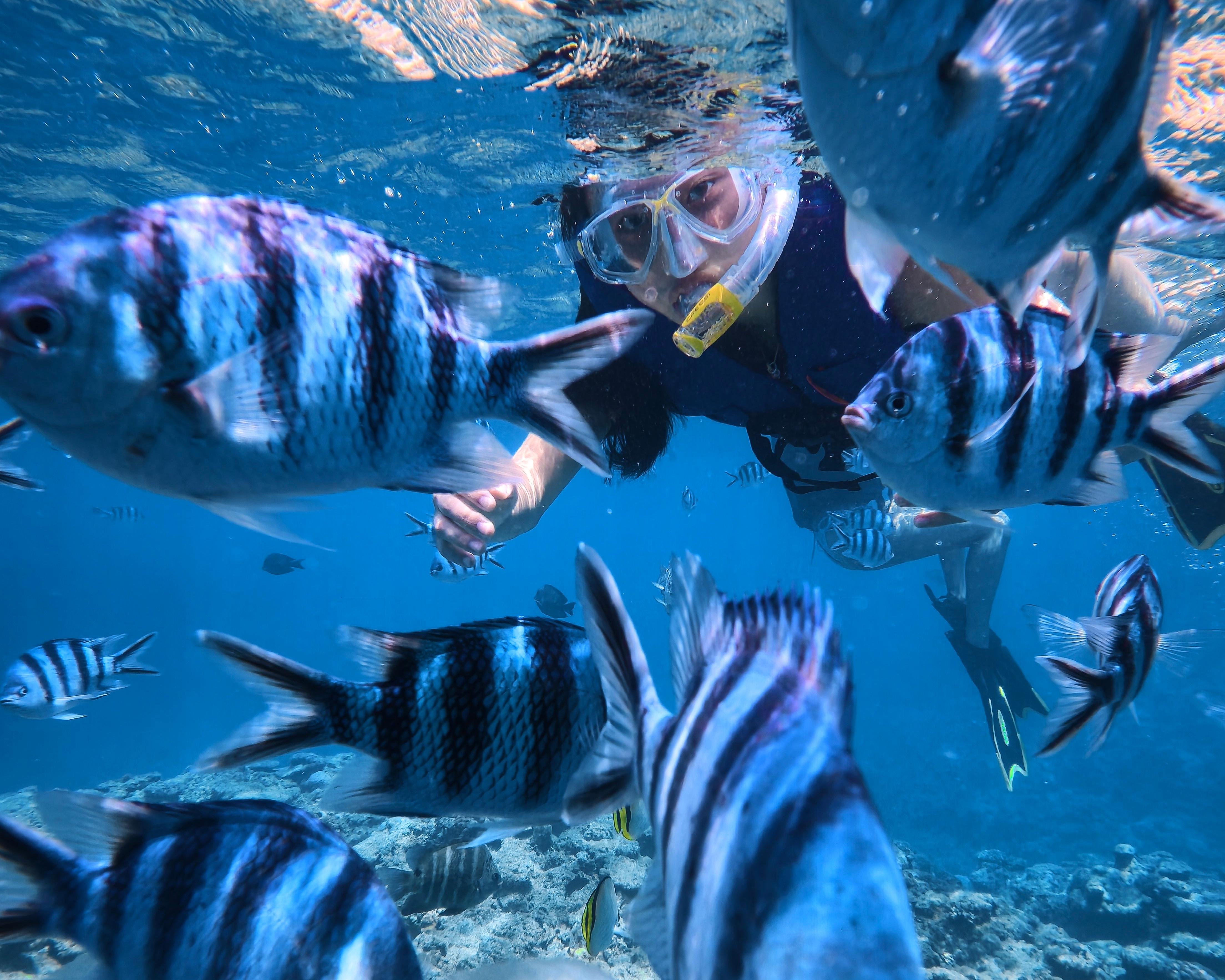
The Most-Reviewed Blue Cave Trip on the Shelf
A private guide rather than a group, and the clearest closure wording on the shelf: an alternative beach offered, and a full refund if you would rather not take it. Rated 4.9/5 by 156 verified guests — more than twice the review count of any other Blue Cave trip here — from about $45, with free cancellation.
Check Availability & Book